
-
Developed in 1 week
-
Unreal Engine 5.3
-
Third Person Adventure
-
Linear level with branches
-
Stylized environment
-
Solo Project
In this project, it was important for me to capture the essence of ancient Egyptian architecture while also allowing room for creative reinterpretation. Designing a setting based around an archaeological excavation near an old temple helped establish a strong thematic foundation and guided my decisions throughout the level design process.
Project Details
Introduction
II
III
I
Convey the character of an Egyptian Tomb
Implement interactive objects
Develop own
visual style
Personal goals I wanted to achieve with this level
I explore visual references in a variety of styles — from real-world environments to video games and films.
Whether it's concept art, high-quality renders, or stylized low poly graphics, I’m constantly looking for visual ideas that can inform and inspire my level design work. I believe that inspiration can come from anywhere — every image has the potential to shape a unique gameplay experience.
I like to categorize the examples that inspire me to better highlight the specific elements I find most valuable in each.
I often start my level design process by gathering references and inspiration.
Preproduction
In the early phase of level design, I like to sketch out initial ideas for gameplay spaces—laying out room arrangements, natural environments, and key structural elements. Quick drawings on paper help me evaluate whether the proportions and flow of my initial concept work as intended or need further refinement.
This is also the moment when I start thinking about the core mechanics of the level—what the player will need to do, and which interactions will be used to progress through the space.
Before jumping into the engine, I always start with 𝘀𝗶𝗺𝗽𝗹𝗲 𝘀𝗸𝗲𝘁𝗰𝗵𝗲𝘀—they play an important role of my level design process. Sketching helps me:
1. 𝗩𝗶𝘀𝘂𝗮𝗹𝗶𝘇𝗲 𝗶𝗻𝘁𝗲𝗿𝗲𝘀𝘁𝗶𝗻𝗴 𝘀𝗽𝗮𝗰𝗲𝘀 𝗼𝗿 𝗰𝗿𝘂𝗰𝗶𝗮𝗹 𝗽𝗿𝗼𝗽𝘀 before committing to a 3D layout.
2. 𝗦𝘁𝗮𝘆 𝗳𝗼𝗰𝘂𝘀𝗲𝗱 𝗼𝗻 𝘁𝗵𝗲 𝘁𝗵𝗲𝗺𝗲, ensuring the level feels authentic and immersive.
3. 𝗥𝗲𝗳𝗶𝗻𝗲 𝘁𝗵𝗲 𝗳𝗹𝗼𝘄 𝗮𝗻𝗱 𝗰𝗼𝗺𝗽𝗼𝘀𝗶𝘁𝗶𝗼𝗻, making sure the player’s journey is engaging from the start.
Sketching out Ideas
PART 9: ENDING
With both crystals in hand, the player returns to the guardian sphinxes. Offering the jewels triggers the ancient mechanism—opening the bridge and the treasury doors.
The path is now clear. The player can finally enter the Pharaoh’s vault and claim the treasure.
PART 8: RIDDLE 2
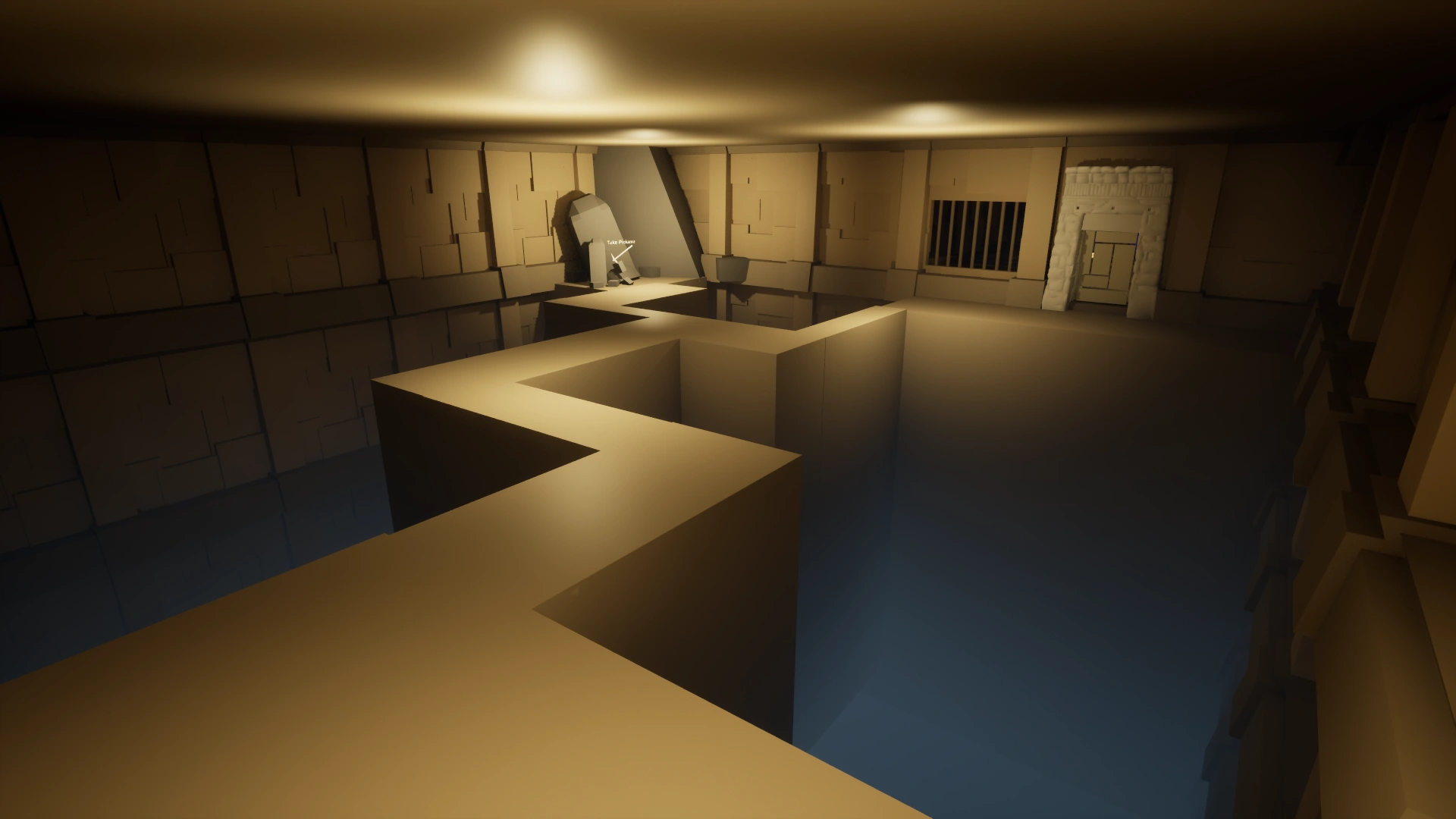
The second path to the crystal challenges the player’s agility and precision. To progress, they must carefully navigate a chasm-filled chamber, where a single misstep leads to a fall.
After successfully crossing, the player discovers a pickaxe—an essential tool for breaking through a barricaded doorway that guards the second crystal.
PART 7: RIDDLE 1
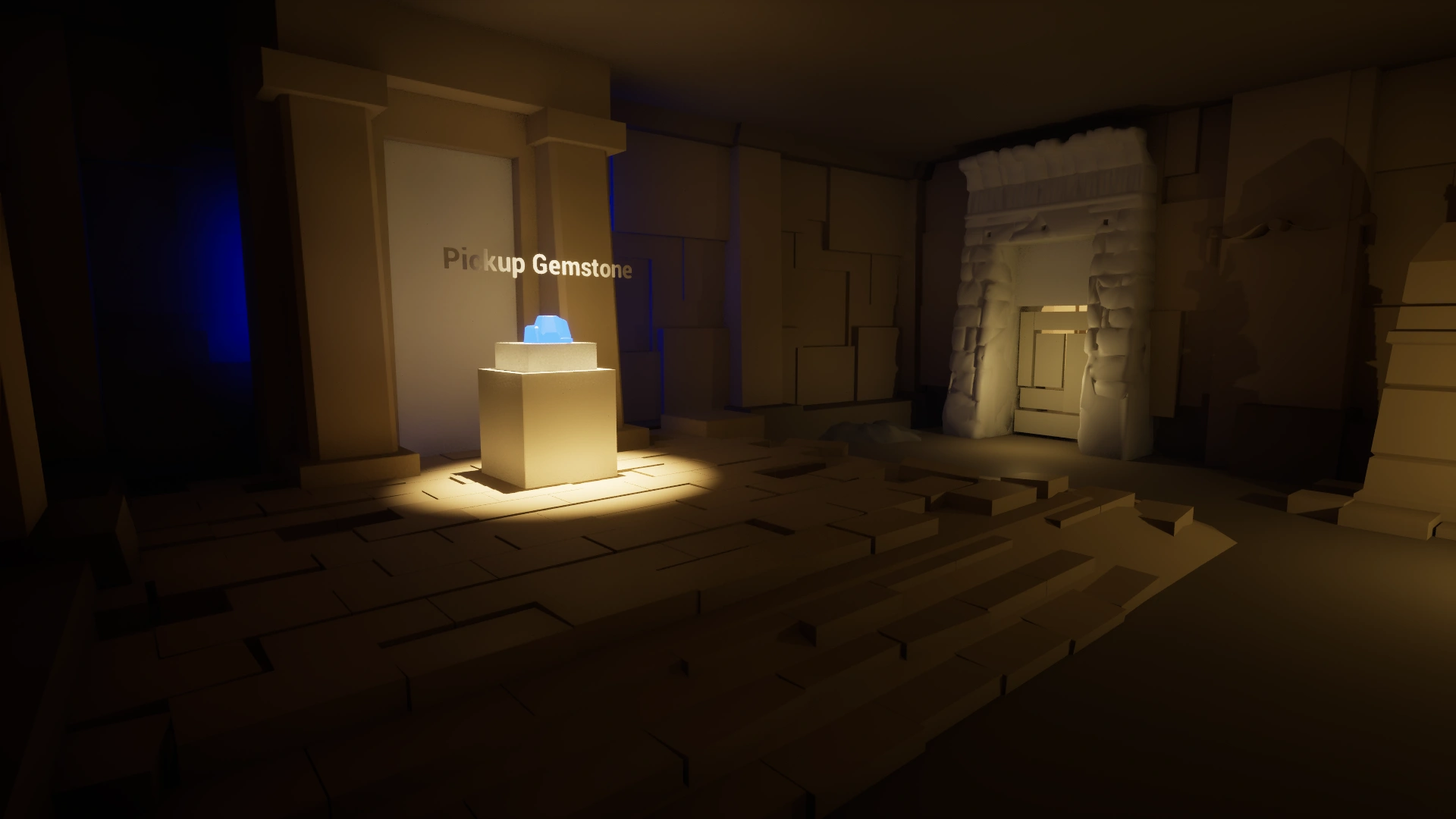
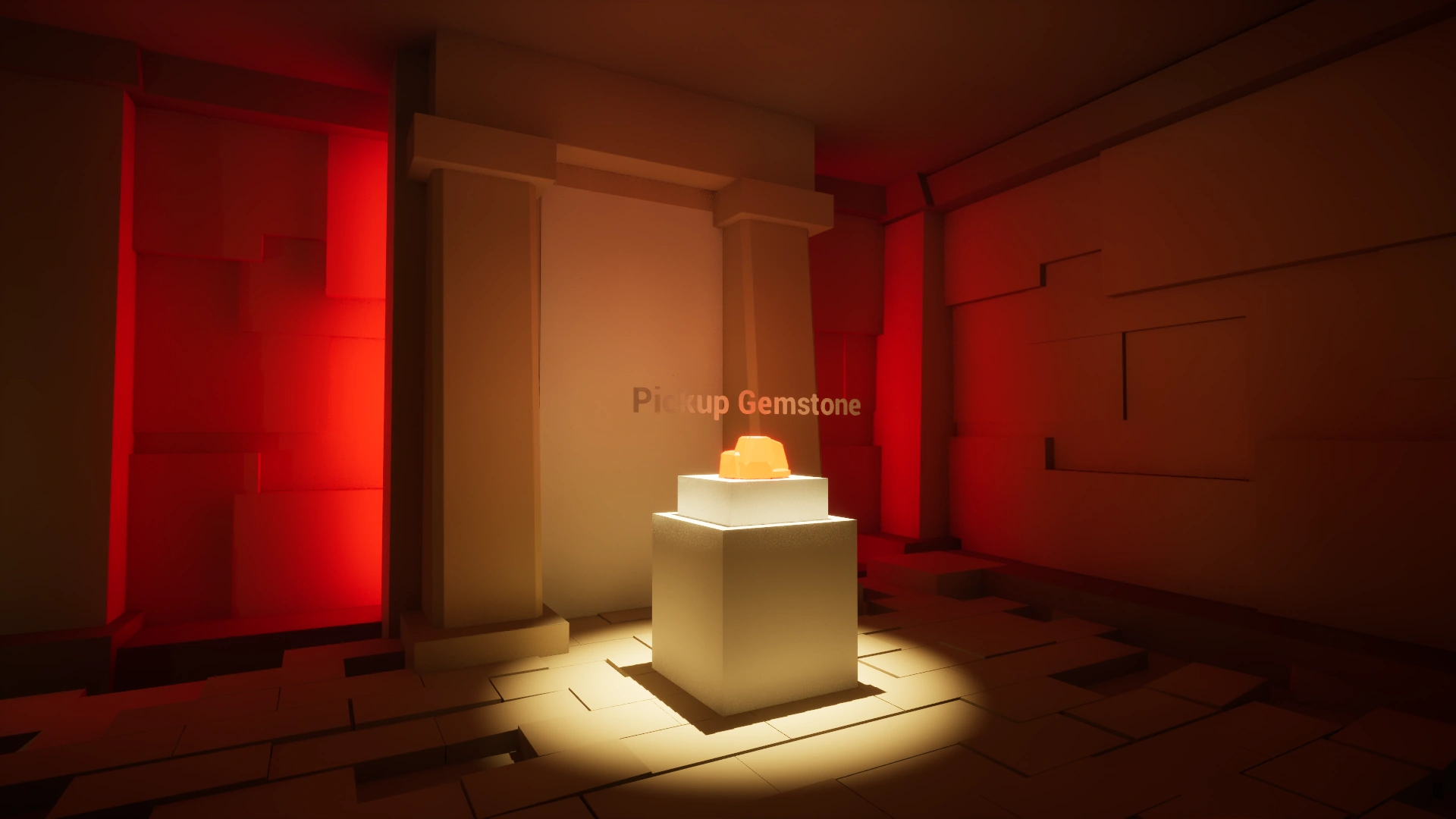
The first riddle emphasizes observation and clever problem-solving. Upon entering the room with a pressure plate, the player immediately notices a red crystal behind a gated barrier. However, reaching it isn’t straightforward—it requires locating a sufficiently heavy object to activate the mechanism.
Fortunately, the adjacent chamber contains large stone blocks, which can be rolled onto the pressure plate. This interaction opens the way forward, allowing access to the crystal.
PART 6: TWO RIDDLES
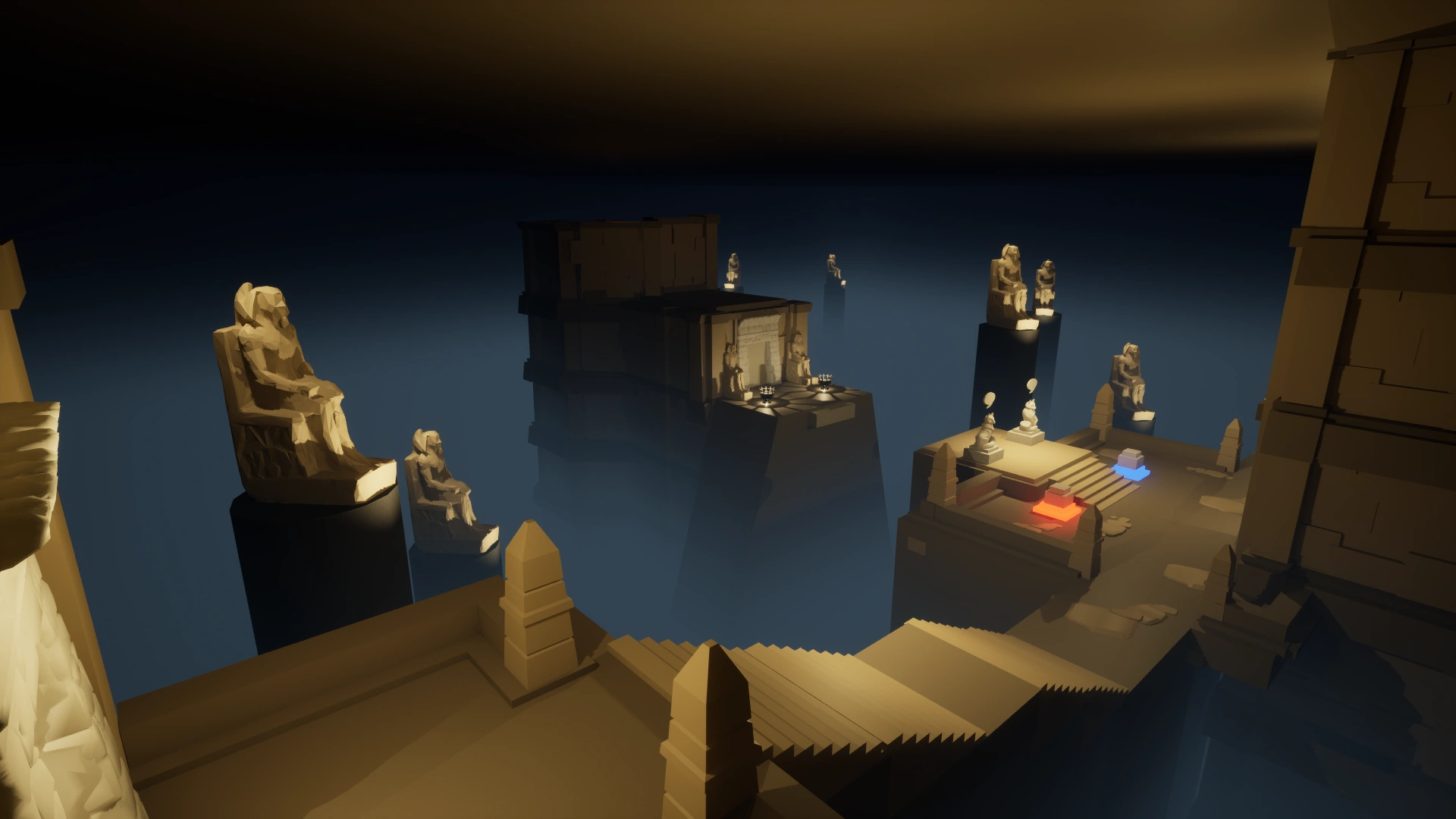
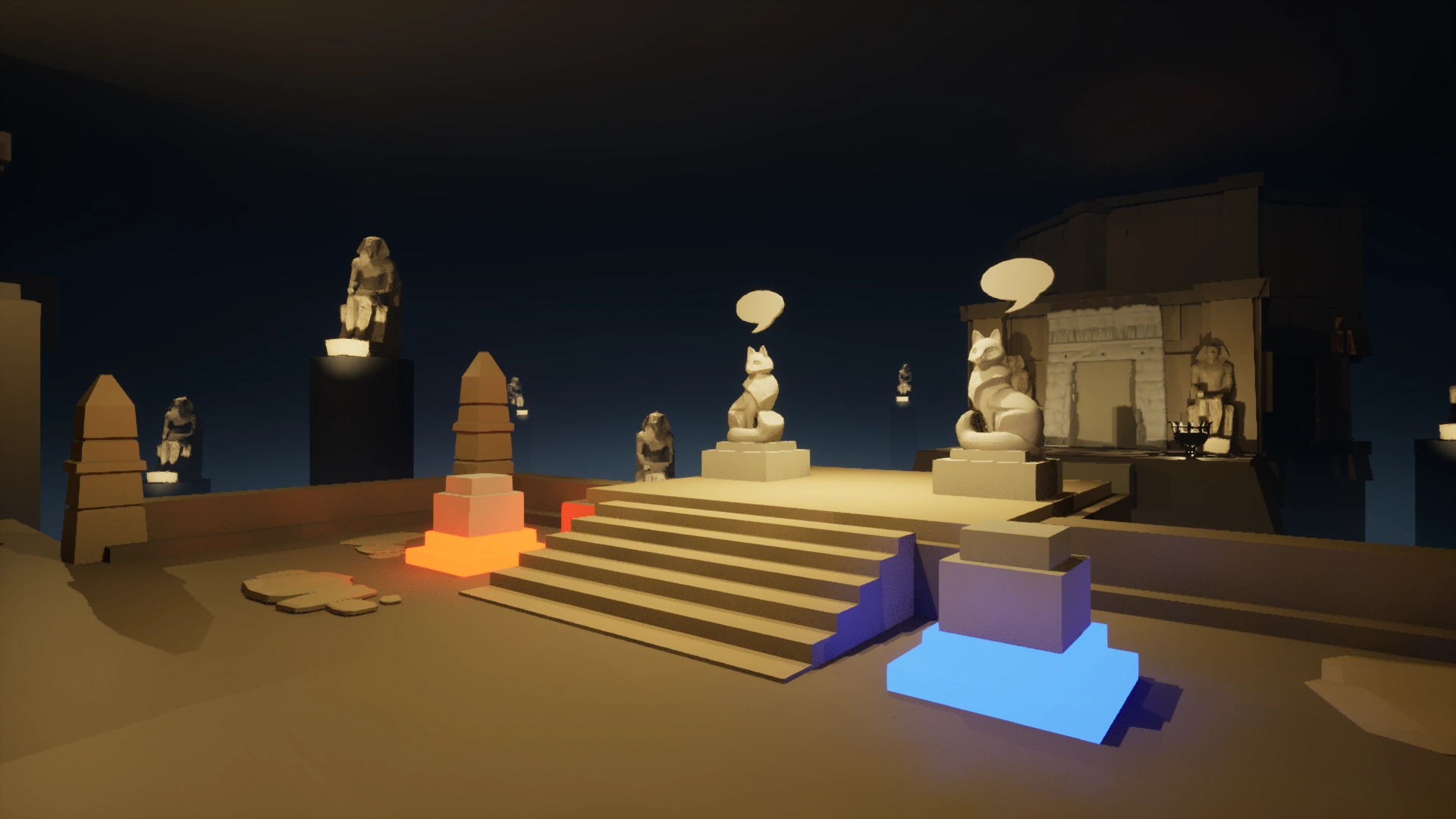
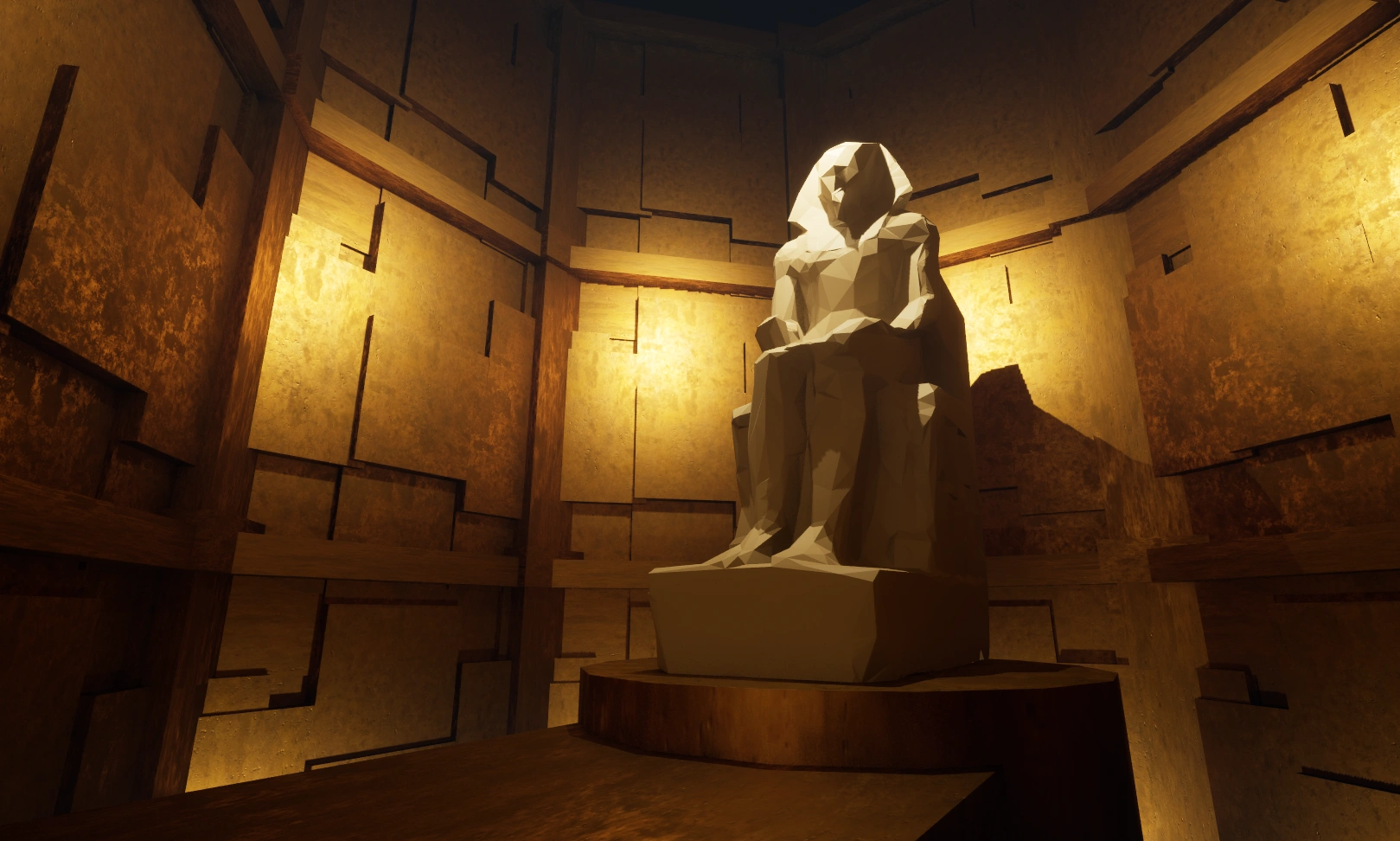
To move away from a strictly linear player experience and introduce a sense of agency, I designed two alternative paths—each culminating in a unique puzzle. Although the player can see the ultimate goal ahead—the Pharaoh's treasury—the path is blocked by two guardian sphinxes who demand the return of their lost jewels.
By exploring both side paths and solving their respective puzzles, the player earns the jewels required to unlock the bridge and open the treasury doors.
PART 5: DIVERSE SPACES
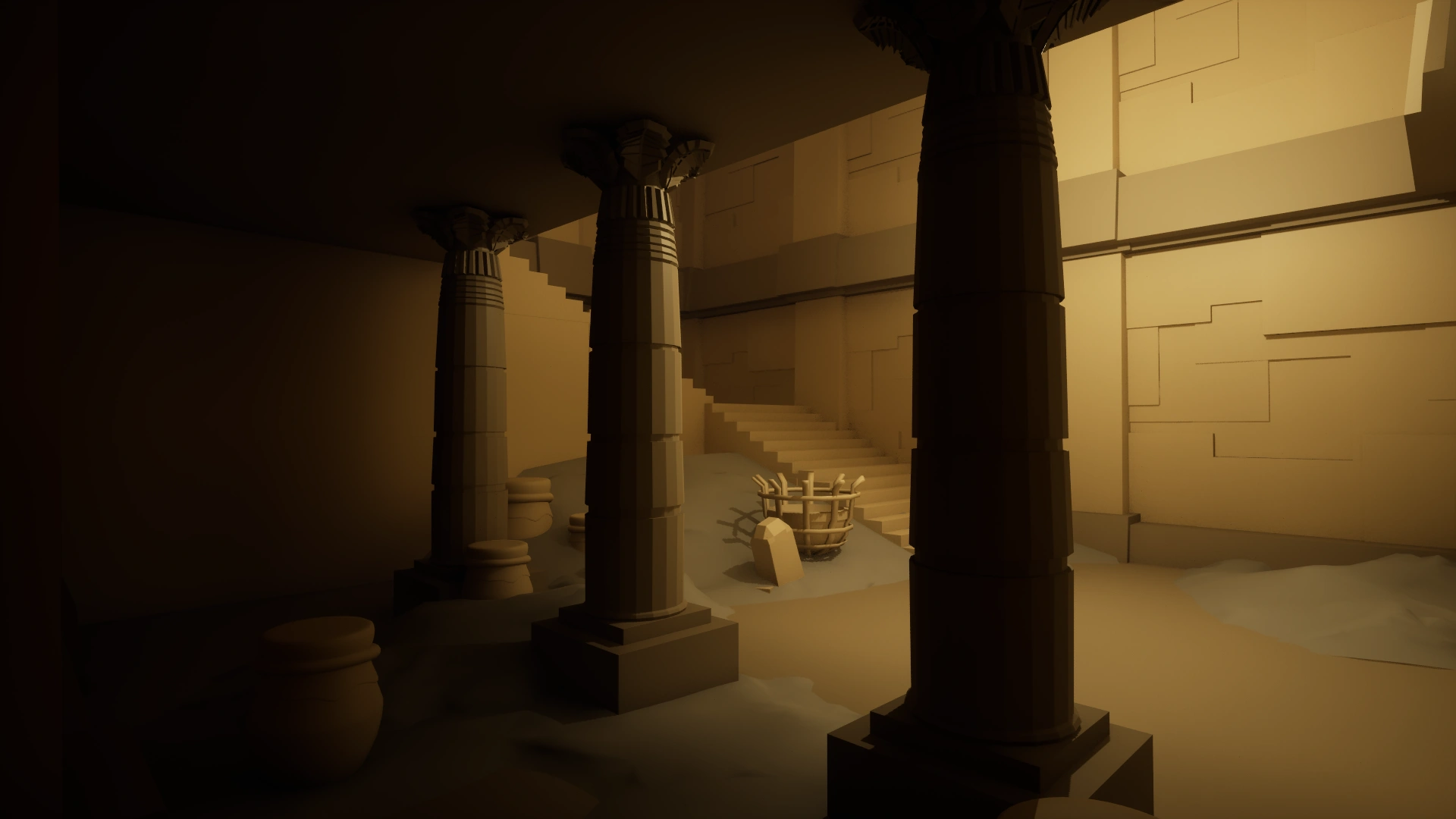
When modeling, I always consider how to diversify gameplay, and varying the space is a key approach.
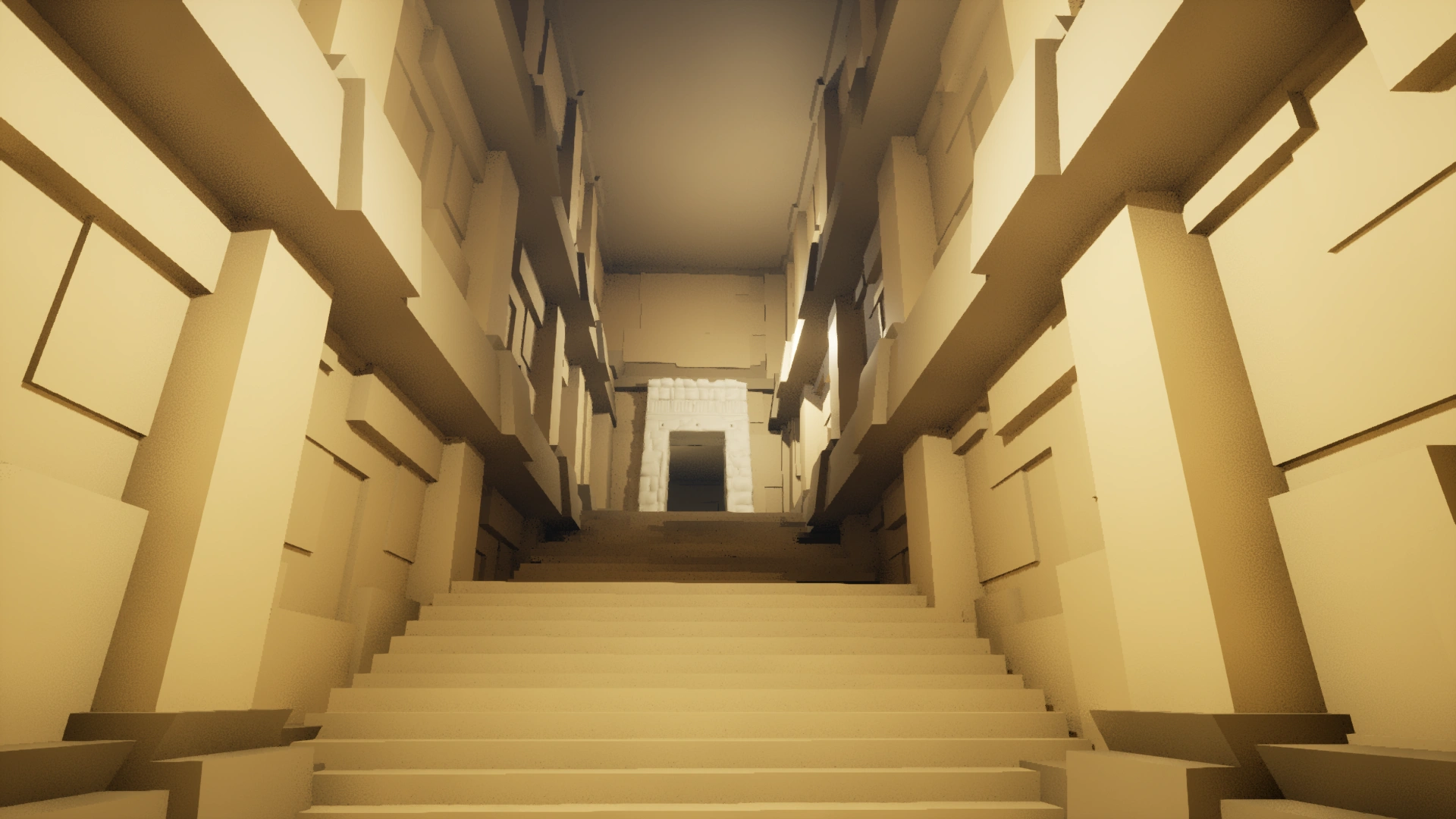
In this example, the player moves from a medium-sized room into a narrow staircase corridor, before emerging into a large, open area. This contrast in scale, height and layout keeps the experience fresh and encourages exploration.
PART 4: TRANSITION ROOM READABILITY
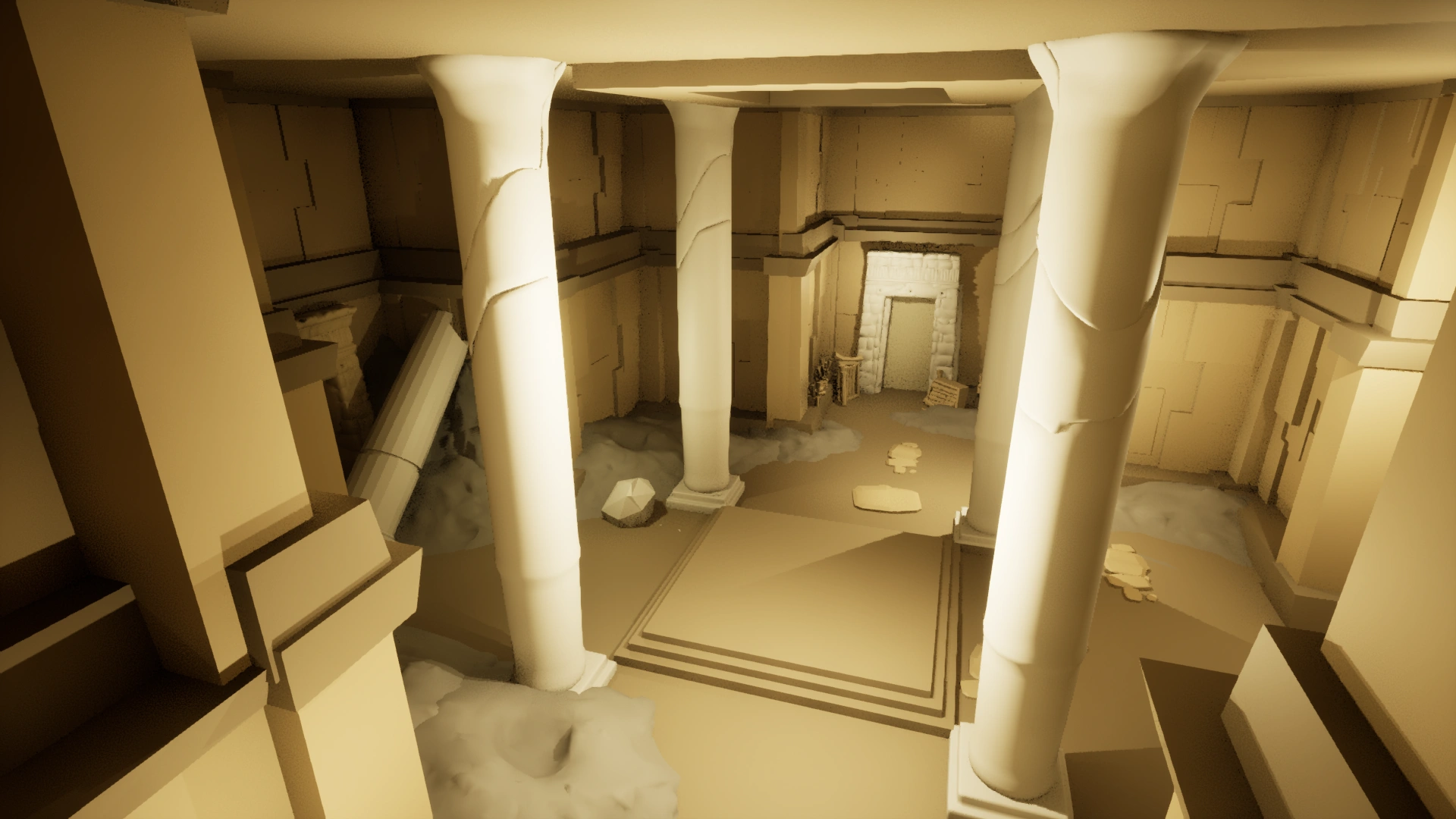
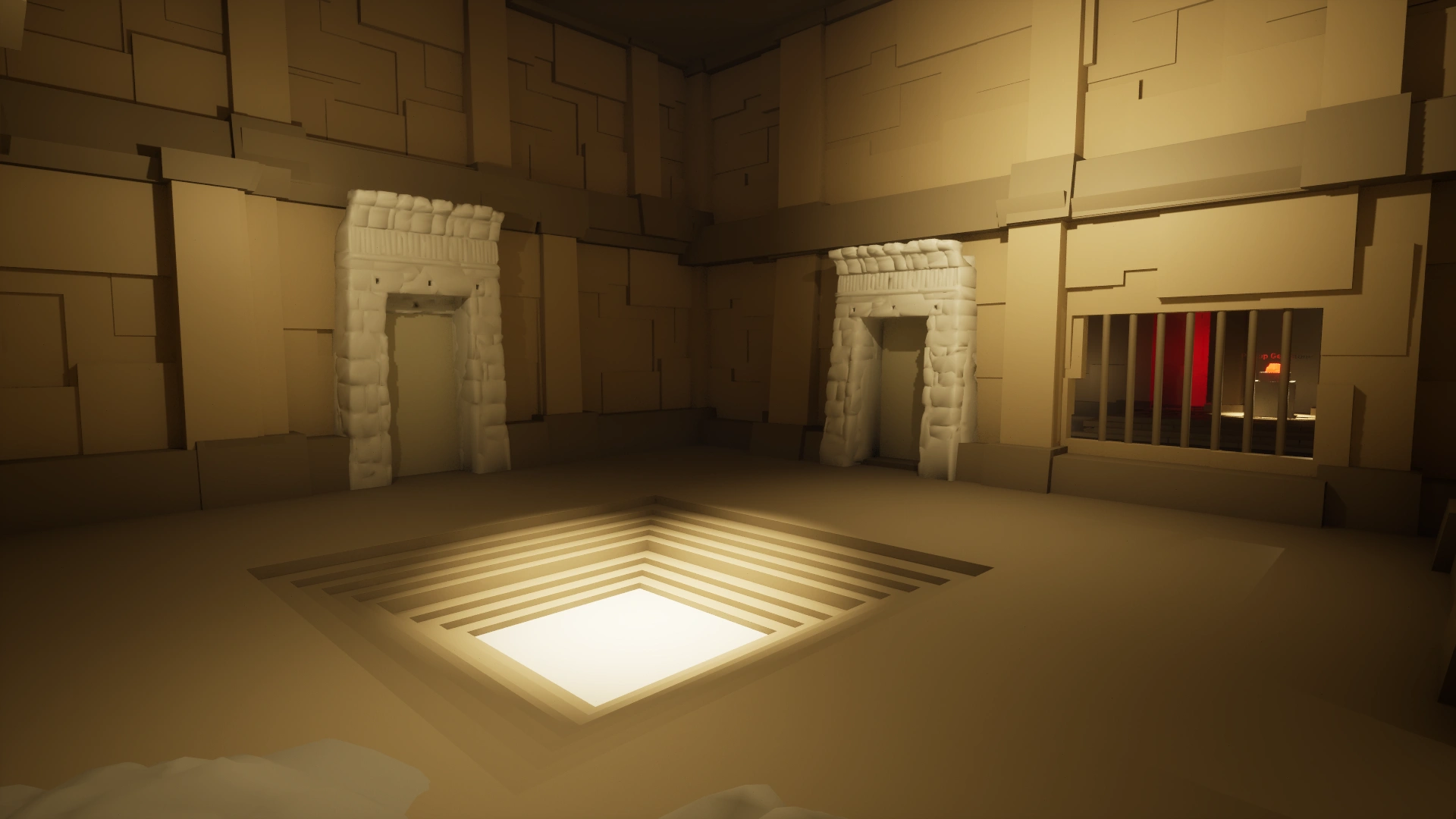
After modeling the room where multiple paths converge,
I realized that its perfect symmetry made navigation confusing.
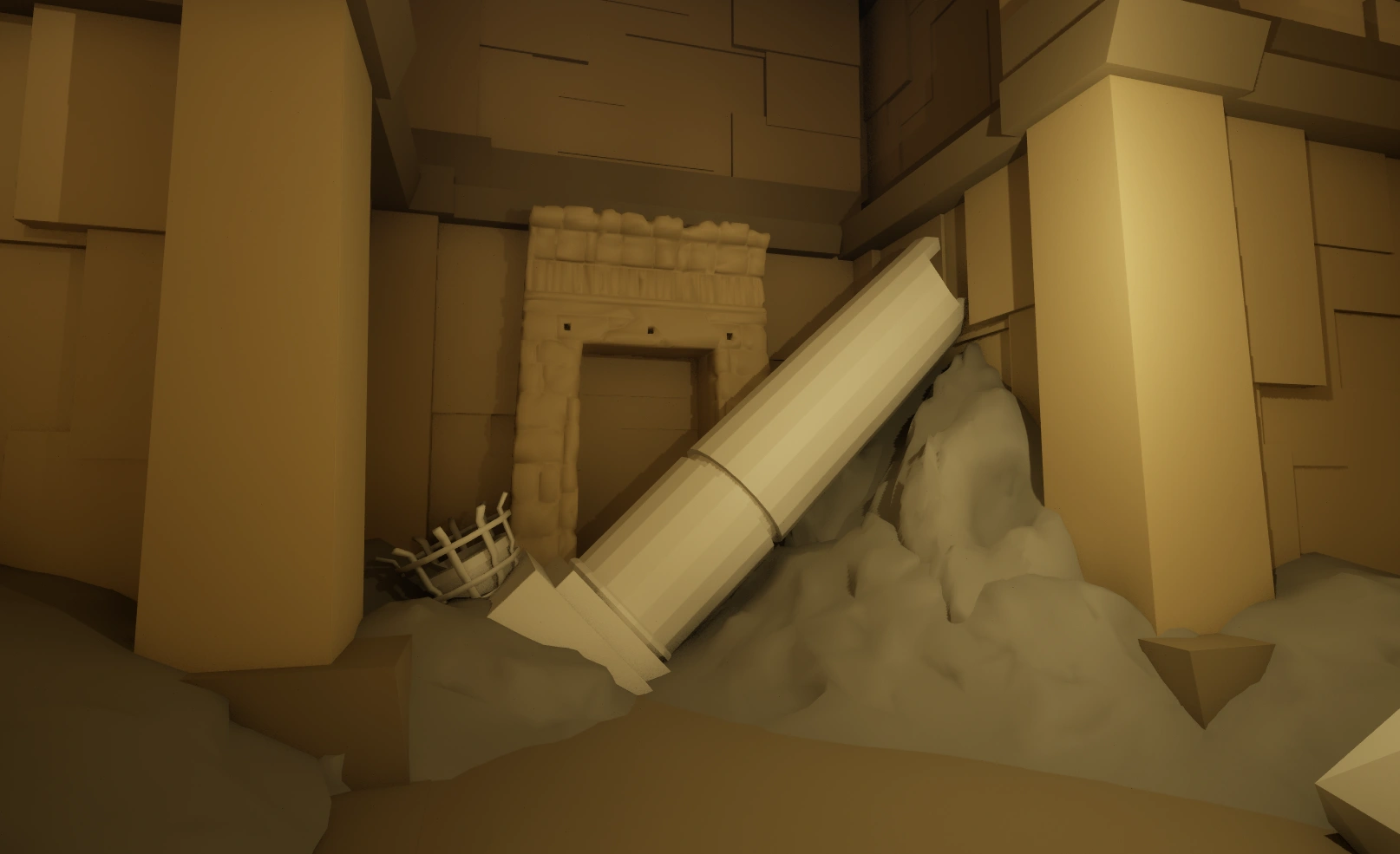
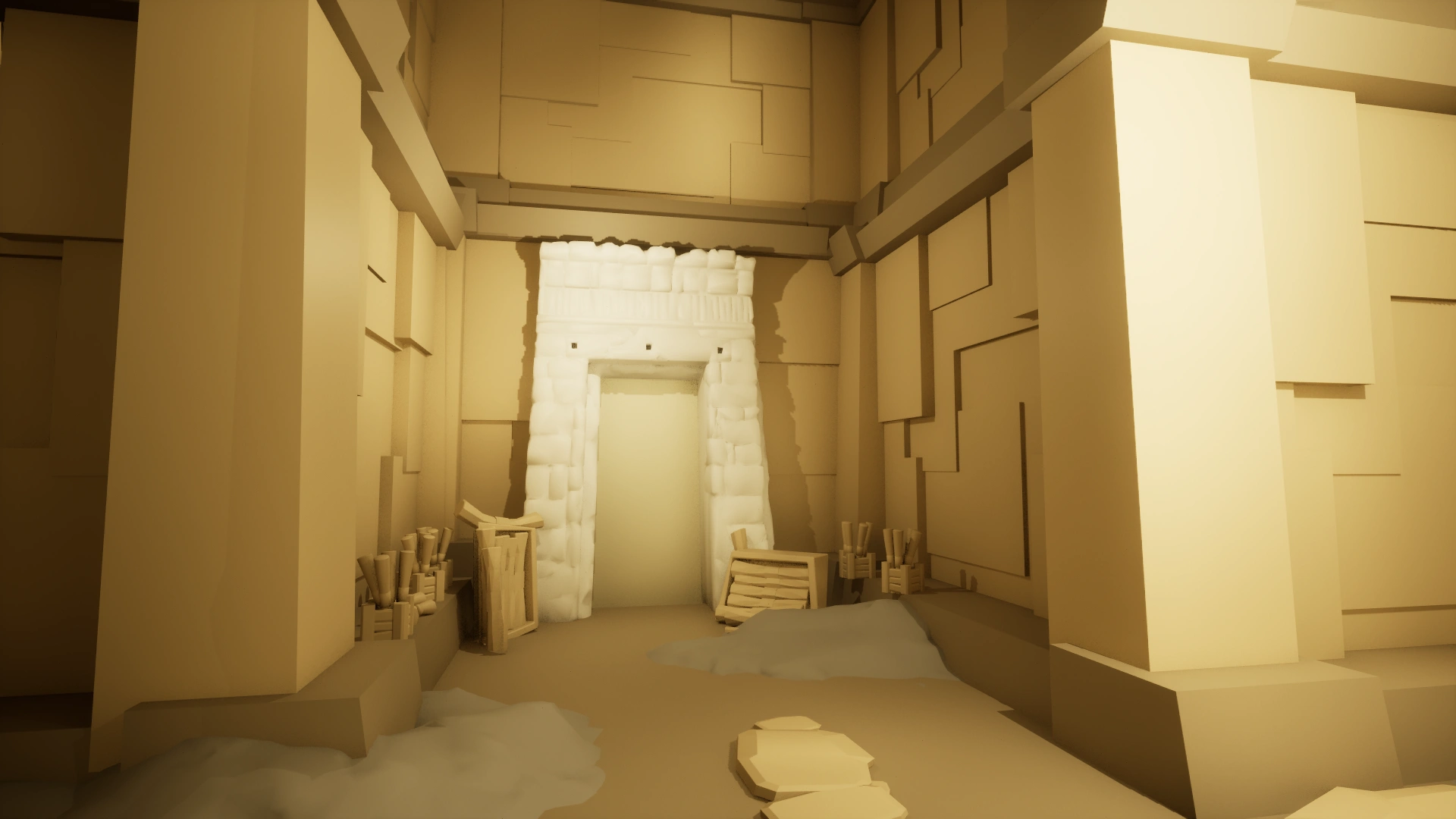
To break this uniformity and prevent spatial disorientation, I gave each of the four entrances a distinct character: one is collapsed, another is surrounded by scrolls and amphorae, a third remains open, and the last features a different type of barrier. This variation helps players quickly differentiate entrances and improves overall orientation.
PART 3: SUPRISE THAT WILL RISE INTEREST
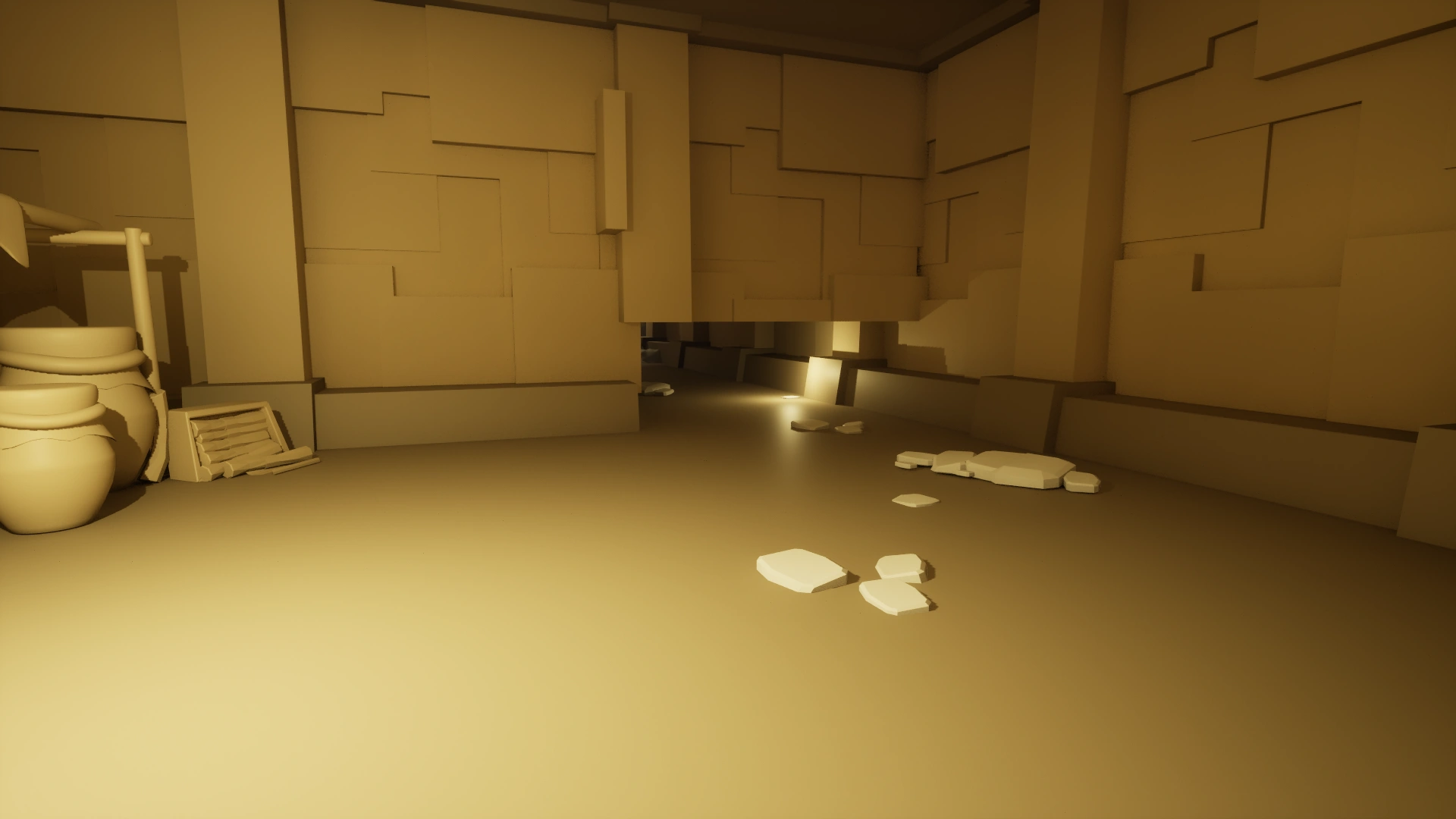
To subvert player expectations, I introduced a collapsing floor sequence at the very start of the level.
Rather than entering through the grand entrance — a predictable and safe route — the player is suddenly dropped into an unexpected path.
This moment of forced detour creates a brief loss of control, which helps build emotional tension and urgency. It also deepens player immersion by shifting the goal: from simply exploring a tomb to actively trying to navigate and survive it.
PART 2: EGYPTIAN STYLE REIMAGINED
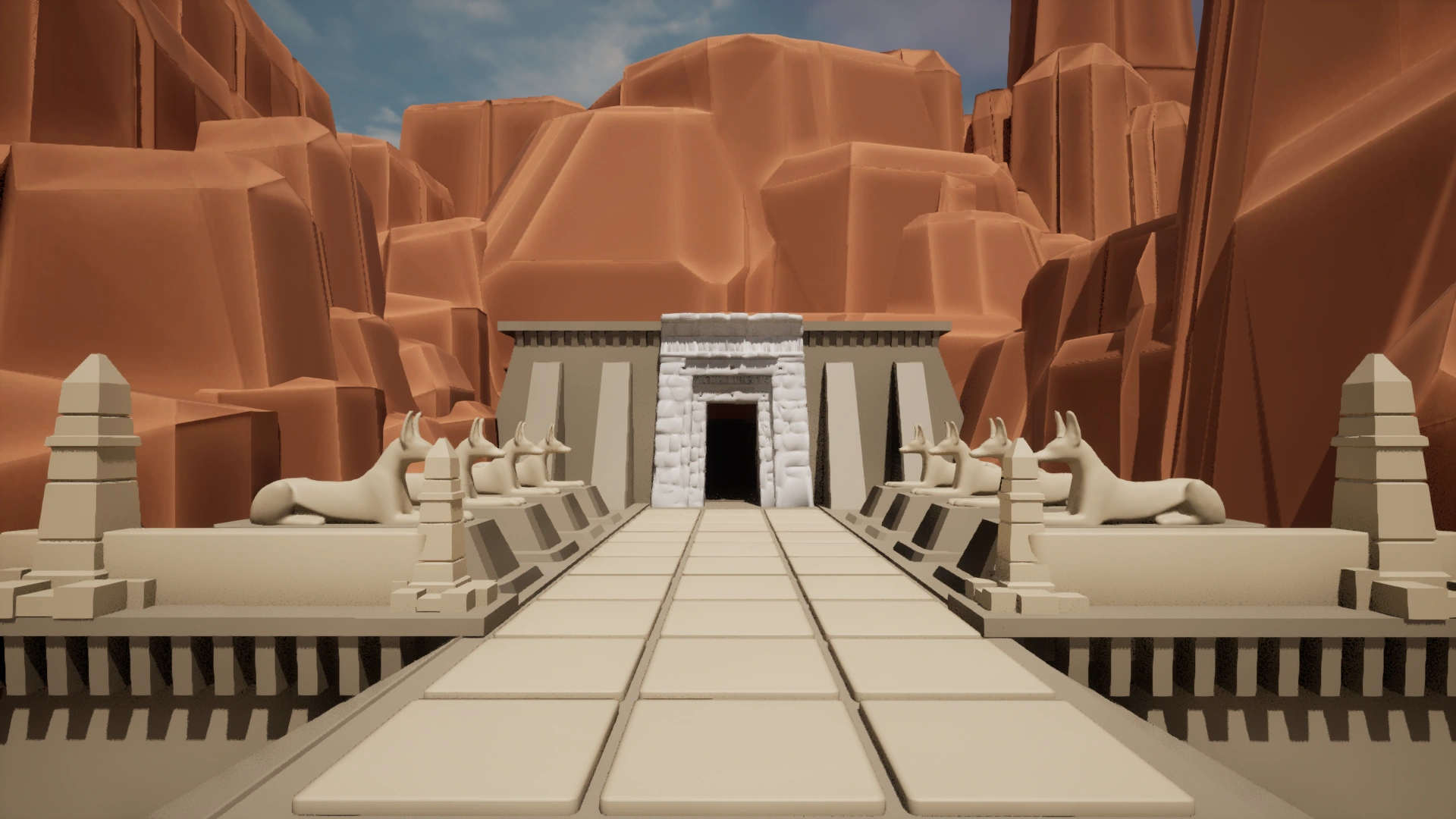
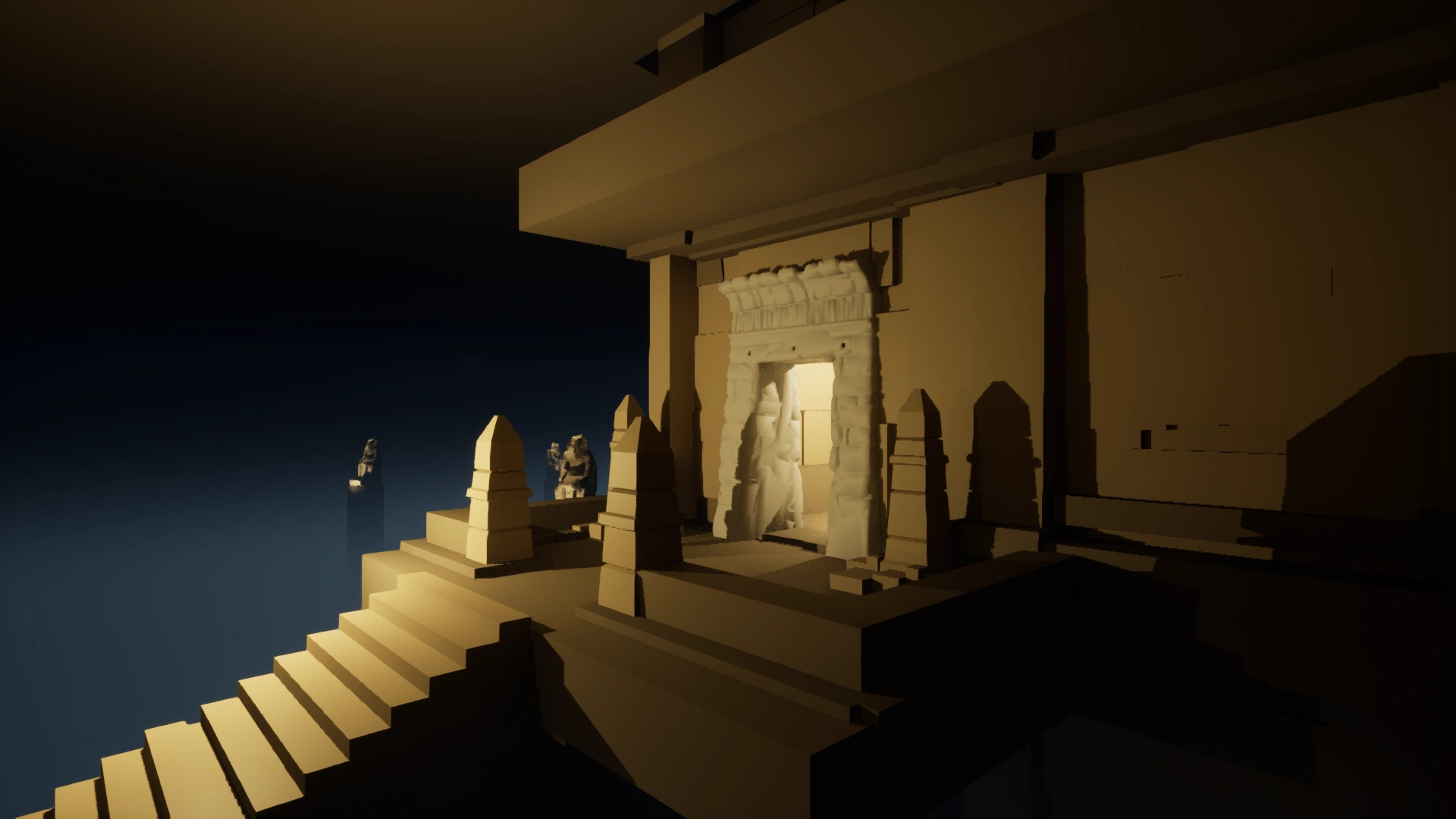
While designing the Egyptian tomb, I drew inspiration from ancient temple layouts built around strong axial symmetry. However, translating real-world architecture directly into a level would have resulted in a linear and less engaging experience.
To avoid a linear and predictable experience, I reimagined the style to suit gameplay — adding ramps, elevation changes, and a winding approach to the temple. This kept the architectural identity while creating a more dynamic and engaging player journey.
PART 1: THEME INTRODUCTION
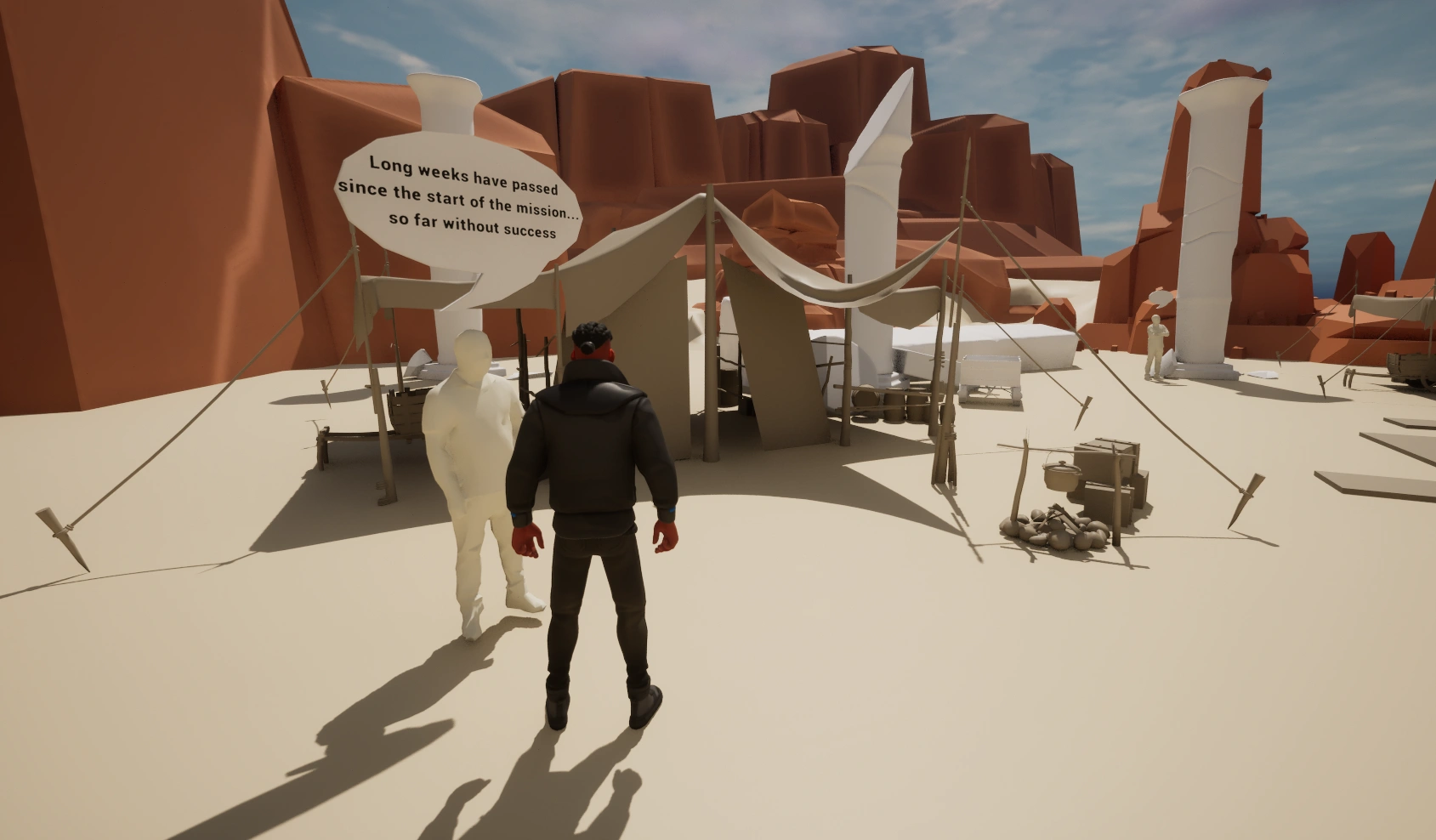
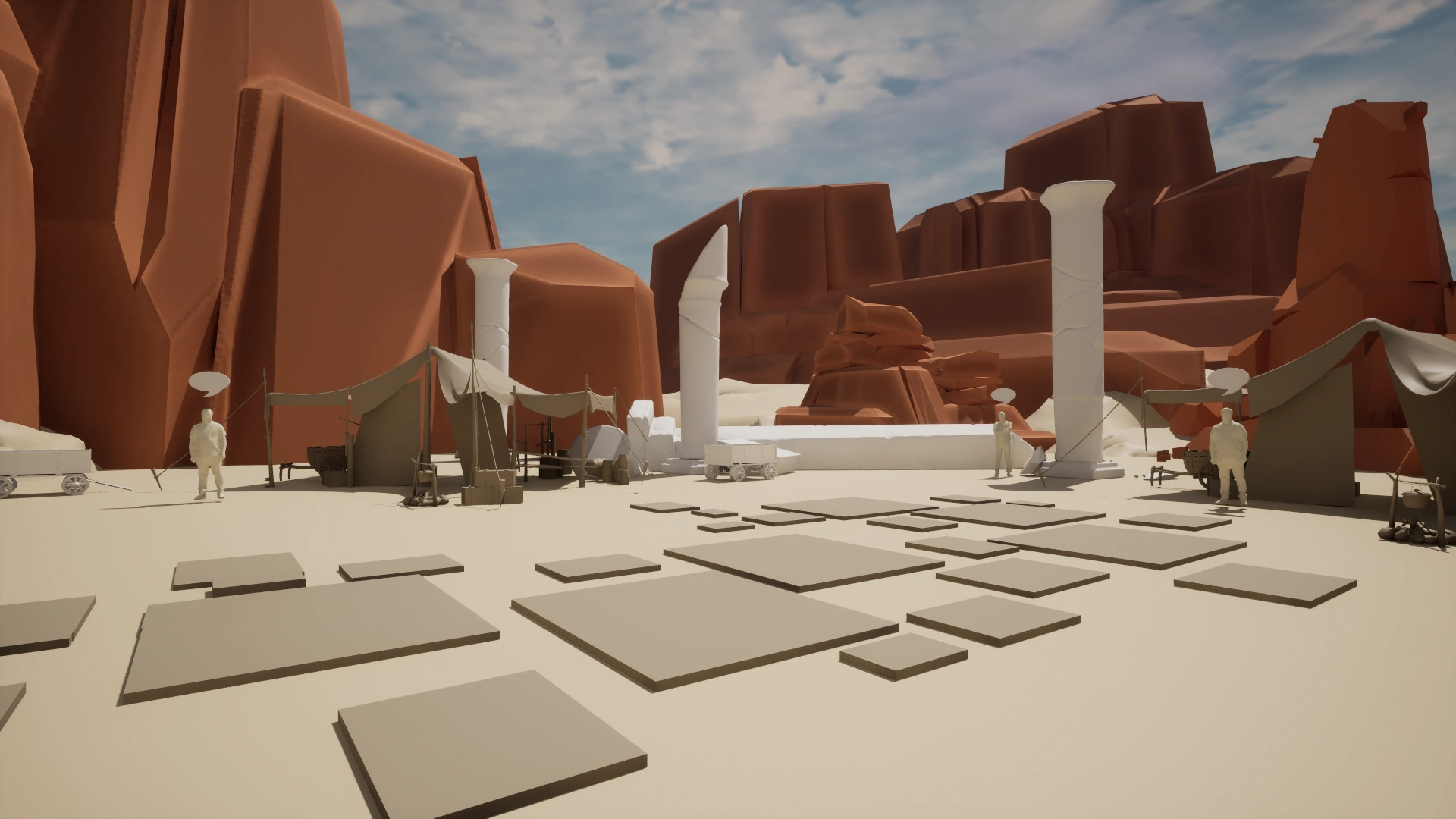
The level opens in an archaeological camp set near an ancient tomb. The area is shared by several factions — workers, scientists, archaeologists, and soldiers — each helping to immerse the player in the narrative. I created a semi-open environment that encourages exploration and gives players the freedom to ease into the mission on their own terms.
When designing levels, I always build beyond the playable boundaries to create the illusion of a larger, living world that extends past the edges of the map.
Level Walkthrough
Variety in rooms
Better ending
Intricate puzzles
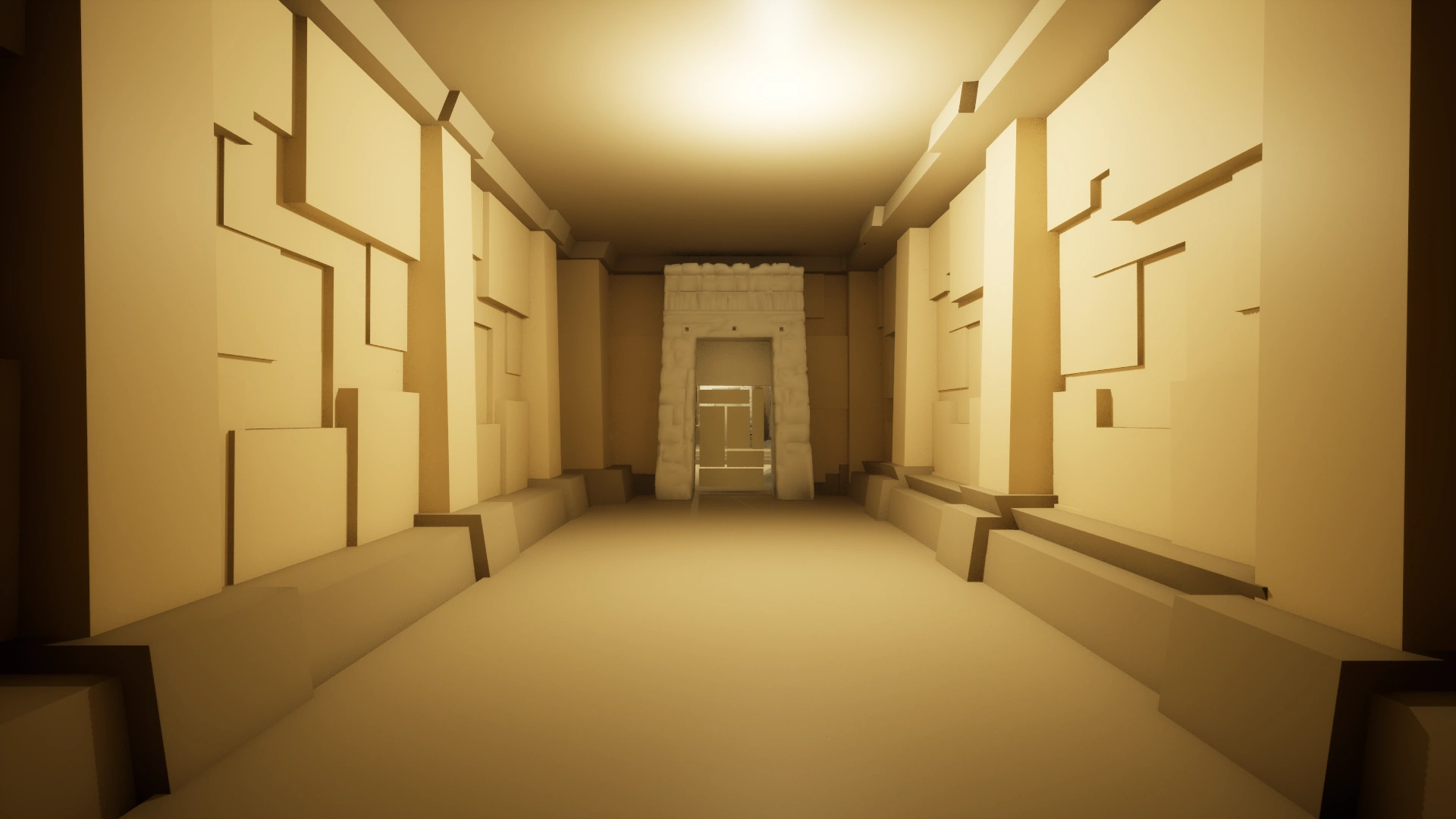
Currently, the rooms lack engaging variation. Introducing differences in height and shaping the spaces so that navigation isn’t straightforward—but instead presents small environmental puzzles—would better capture the essence of an Egyptian sarcophagus.
Additionally, adding more structural damage and collapsed areas could create interesting movement dynamics, offering varied pathways and enhancing spatial diversity.
At the moment, the puzzles are fairly straightforward and can be solved quickly. I’d like to add more agility-based challenges in the dexterity room—incorporating verticality, narrow ledges, and sections of the floor that collapse to increase tension and skill requirements.
For the stone pressure plate puzzle, I’d make it more complex to encourage players to think through the solution logically. This could involve adding an extra transitional room with an additional set of doors controlled by the pressure plate, creating a multi-step puzzle that rewards careful observation and reasoning.
To create a more rewarding finale, I’d design the treasury entrance as a grand reveal - a large, majestic chamber showcasing the Pharaoh’s treasure at its center - designed to impress through scale, richness of detail, and striking visual composition. This contrast with the earlier, narrower spaces would heighten the sense of discovery.
I’d also add a fast-travel option back to base, giving the player a satisfying way to wrap up the journey and share their find with the expedition team. This would bring narrative closure and reward the player not just with loot, but with a sense of completion and shared success.
What would I have changed
If I had more time?
Post Mortem
Project Gallery
For further content please fell free to check out my social media