
-
Developed in 2 weeks
-
Unreal Engine 5.3
-
Third Person Adventure
-
Open World Gamespace
-
Stylized environment
-
Solo Project
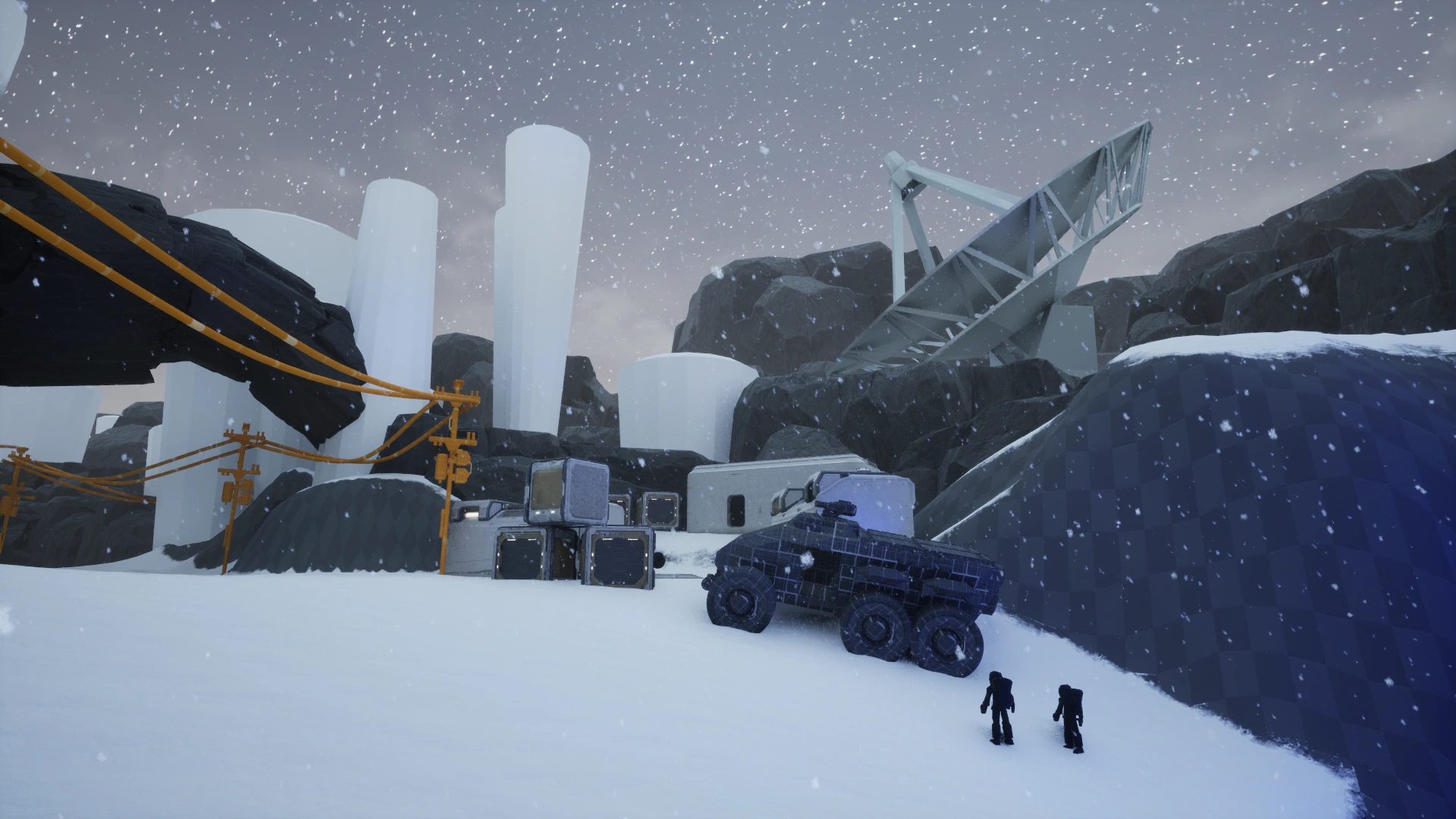
This project focuses on designing an open-world environment with a strong emphasis on exploration and player navigation. At the heart of the playable area lies a futuristic research base, serving as a central hub from which the player embarks on various field missions.
Project Details
Introduction
II
III
I
Designing
Open World Environment
Implementing drivable vehicle
Learning landscape modeling tool
Personal goals I wanted to achieve with this level
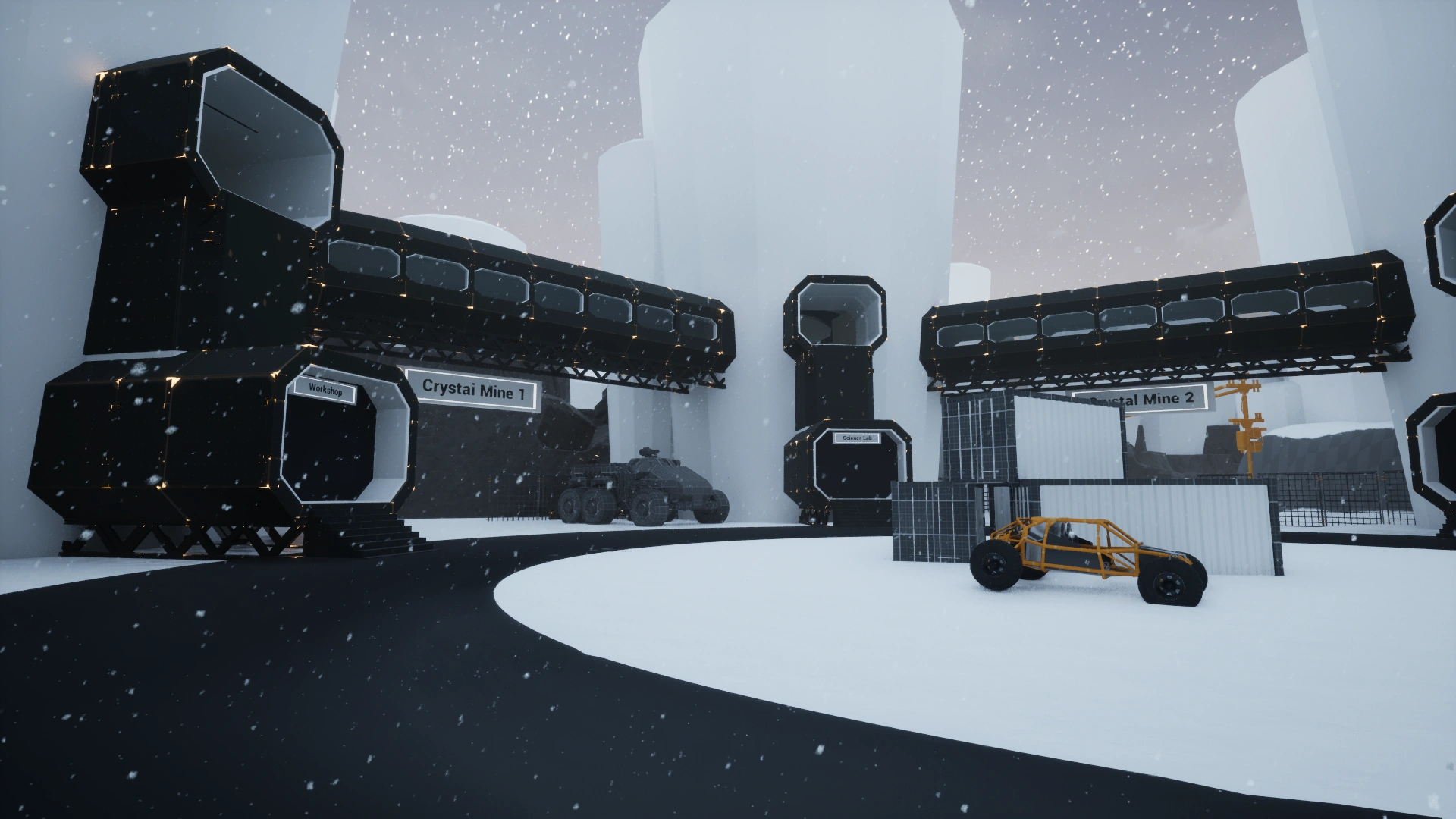
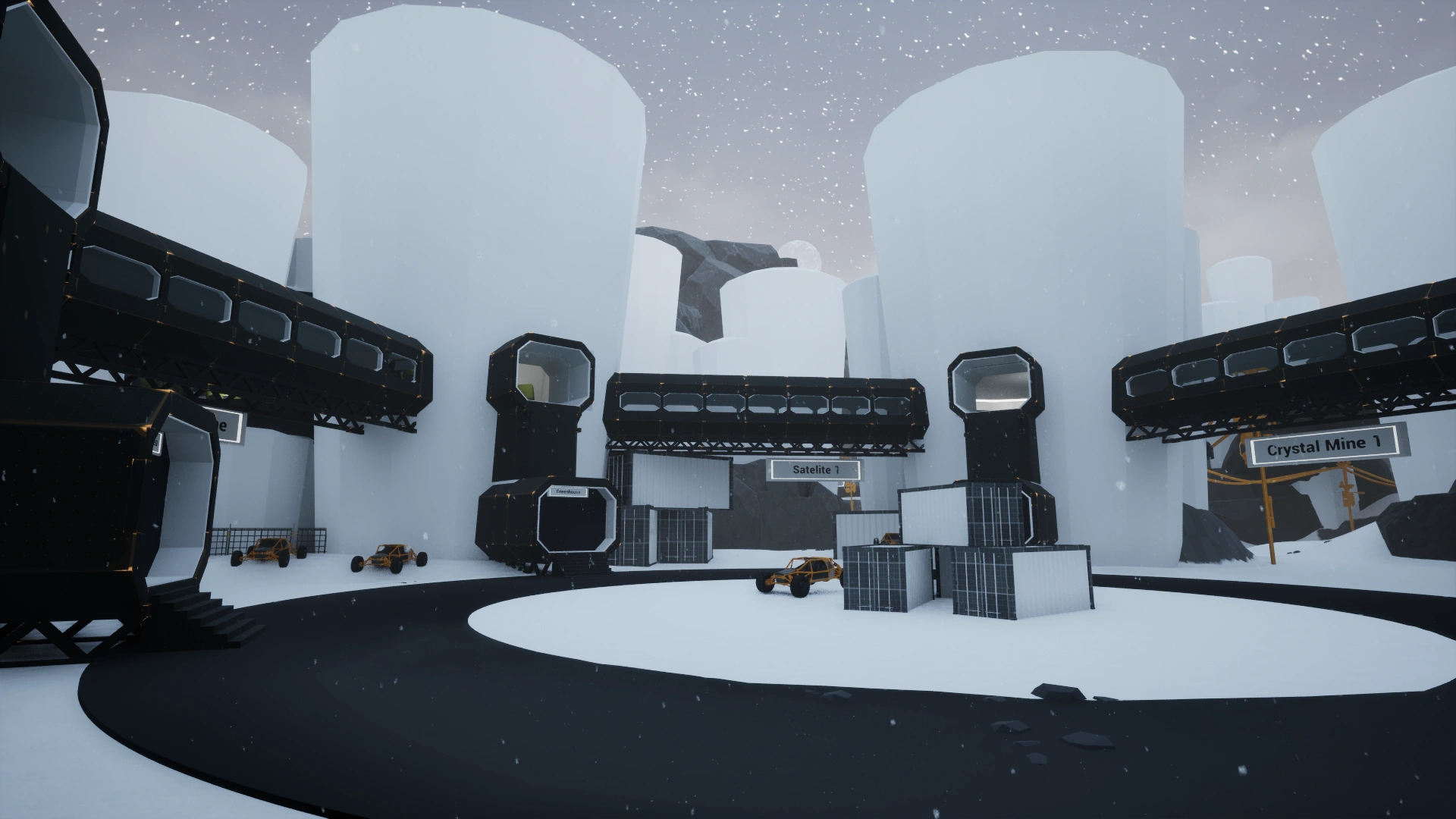
Given that the arctic setting naturally emphasizes a dominant white tone, I decided to give the exterior shell of the base a deep black finish. This contrast inspired a broader design choice: to limit the overall color palette of the level to black and white, with only minimal exceptions.
This restricted palette not only enhanced visual clarity but also reinforced the stark, isolated mood of the environment.
As usual, I began the process by gathering visual and thematic references.
It quickly became clear that I wanted to create a level set in an
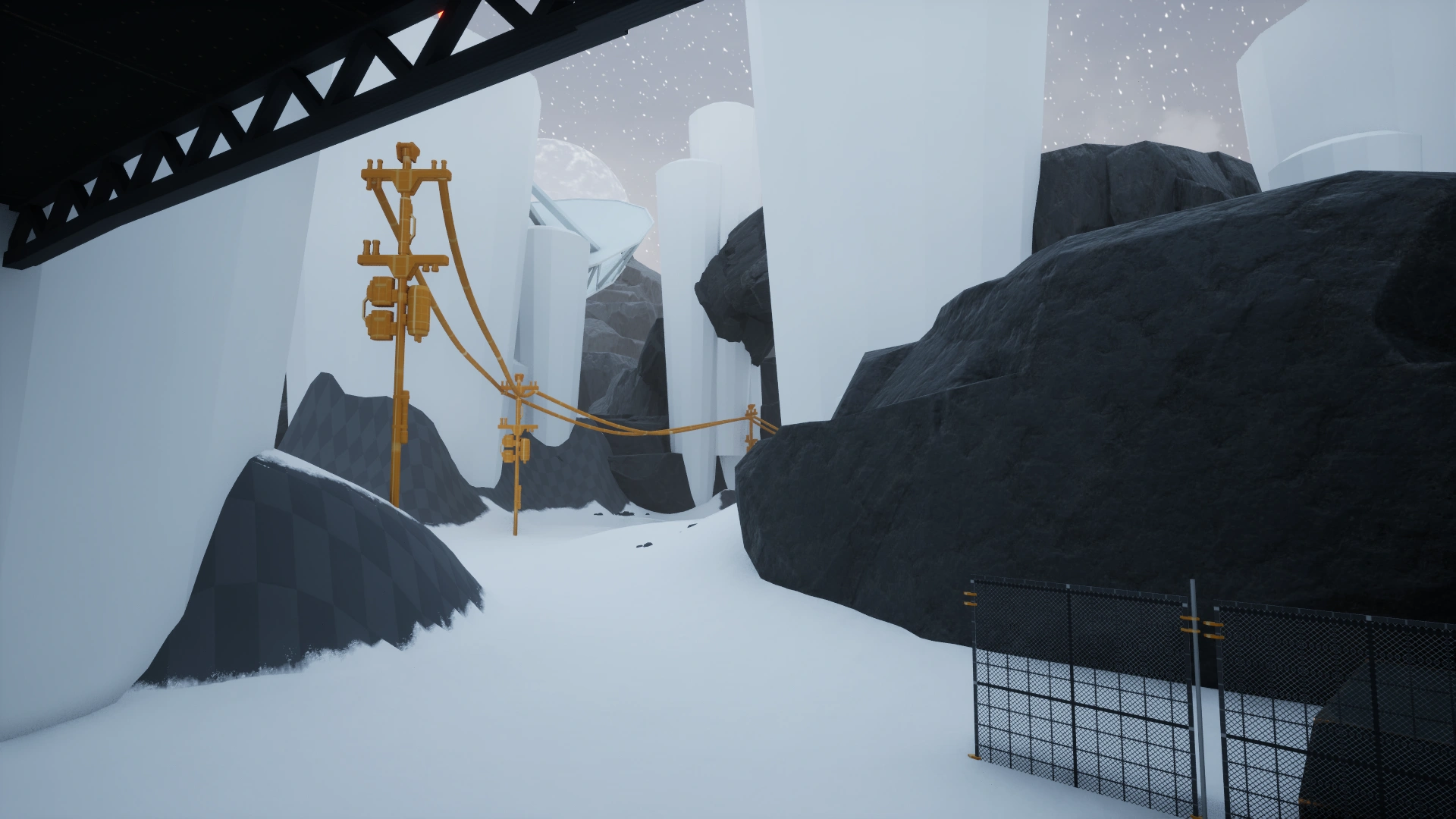
arctic-inspired environment. The core concept for the setting emerged from a local environmental anomaly — a mysterious forest of ice pillars protruding from the surface of the new moon "Arctica Nova".
Preproduction
In addition to designing the base itself, I used sketches to explore whether the concept of ice pillars would work visually. I experimented with their geometric forms to ensure they could function as a cohesive group while still offering visual variety in shape and scale.
While sketching, I came up with the idea of suspending the base in the air, supported by mysterious ice pillars emerging from the ground. Visual exploration through drawings allowed me to quickly test the spatial composition and evaluate whether the base would have a strong visual presence in this setting.
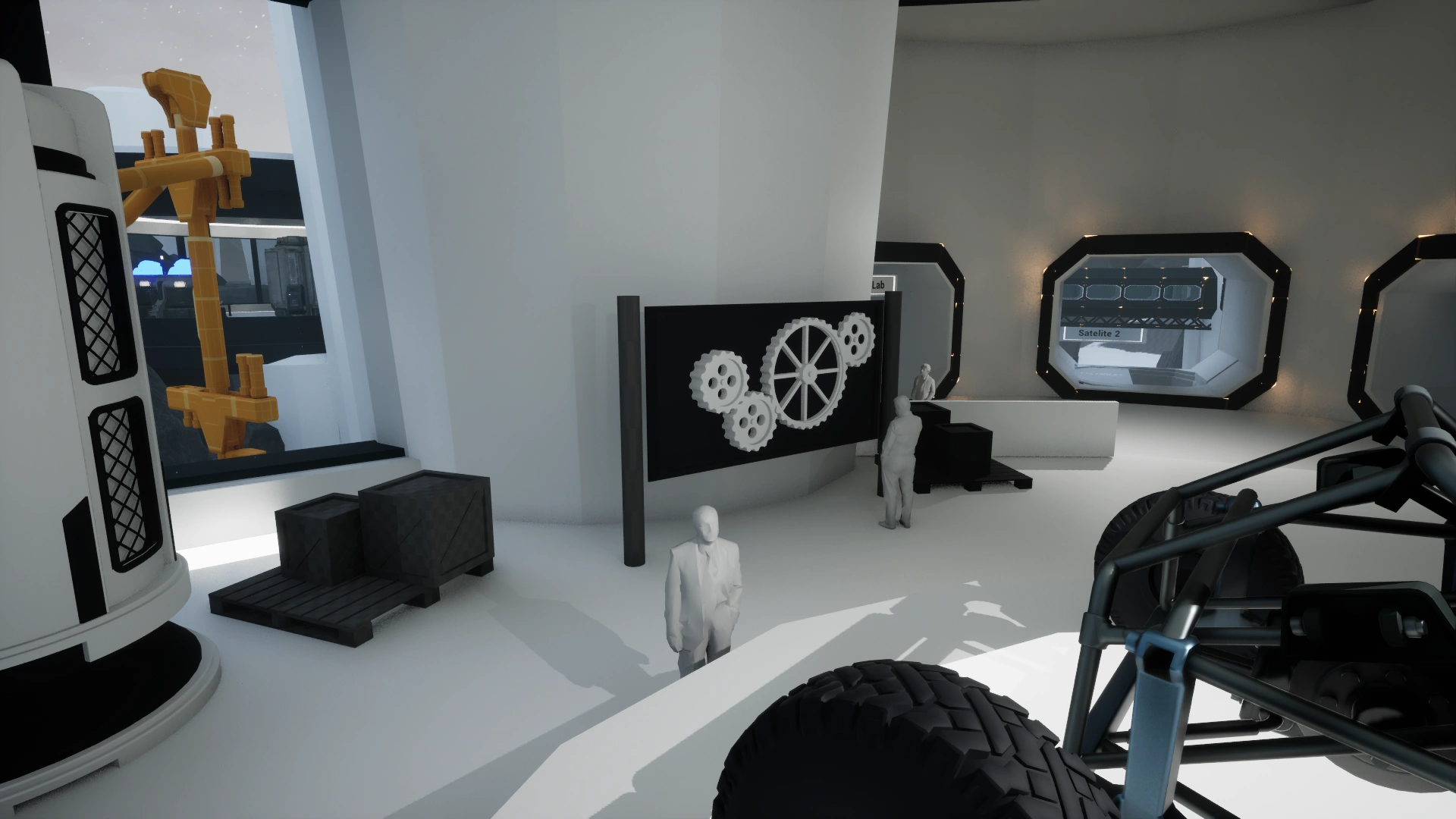
During the sketching phase, I also explored how the base — the level’s focal point — could be organized functionally. I mapped out key spaces like the laboratory, workshop, and logistics center, considering their role in gameplay and narrative. I also developed initial ideas for how the surrounding terrain could be designed to support both visual cohesion and player navigation.
Before jumping into the engine, I always start with 𝘀𝗶𝗺𝗽𝗹𝗲 𝘀𝗸𝗲𝘁𝗰𝗵𝗲𝘀—they play an important role of my level design process. Sketching helps me:
1. 𝗩𝗶𝘀𝘂𝗮𝗹𝗶𝘇𝗲 𝗶𝗻𝘁𝗲𝗿𝗲𝘀𝘁𝗶𝗻𝗴 𝘀𝗽𝗮𝗰𝗲𝘀 𝗼𝗿 𝗰𝗿𝘂𝗰𝗶𝗮𝗹 𝗽𝗿𝗼𝗽𝘀 before committing to a 3D layout.
2. 𝗦𝘁𝗮𝘆 𝗳𝗼𝗰𝘂𝘀𝗲𝗱 𝗼𝗻 𝘁𝗵𝗲 𝘁𝗵𝗲𝗺𝗲, ensuring the level feels authentic and immersive.
3. 𝗥𝗲𝗳𝗶𝗻𝗲 𝘁𝗵𝗲 𝗳𝗹𝗼𝘄 𝗮𝗻𝗱 𝗰𝗼𝗺𝗽𝗼𝘀𝗶𝘁𝗶𝗼𝗻, making sure the player’s journey is engaging from the start.
Sketching out Ideas
Level Map
Mission brief
Base architecture
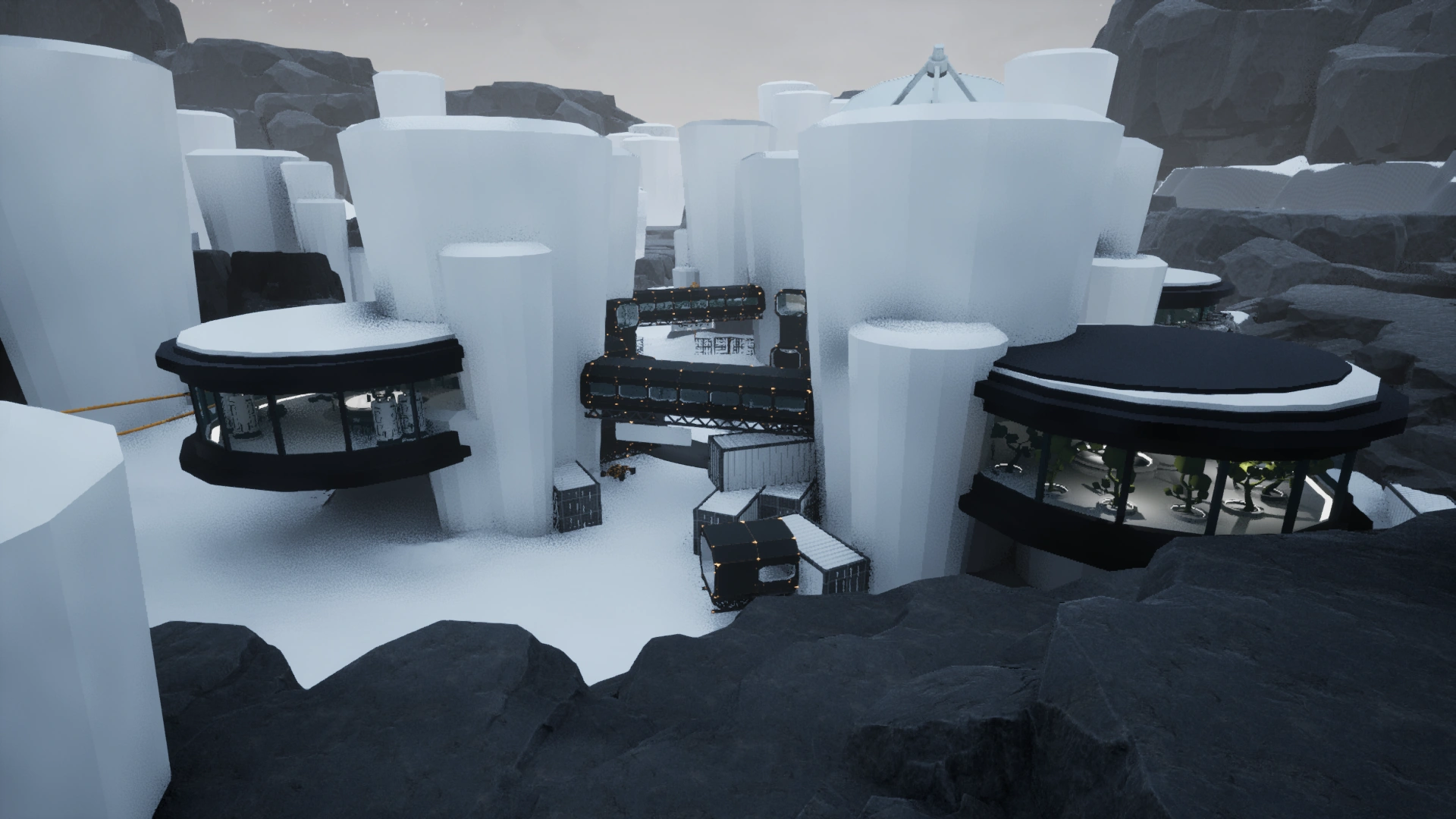
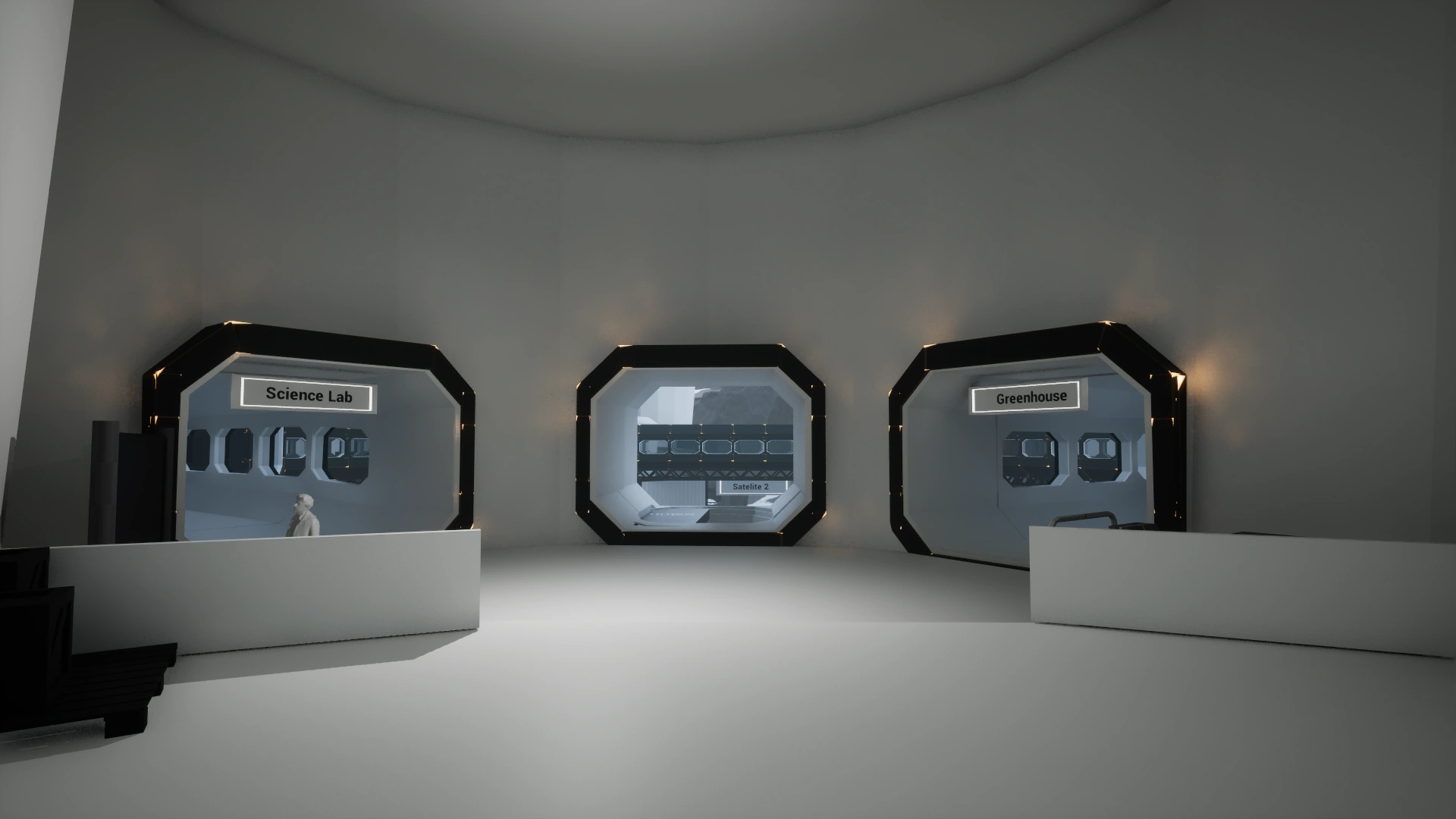
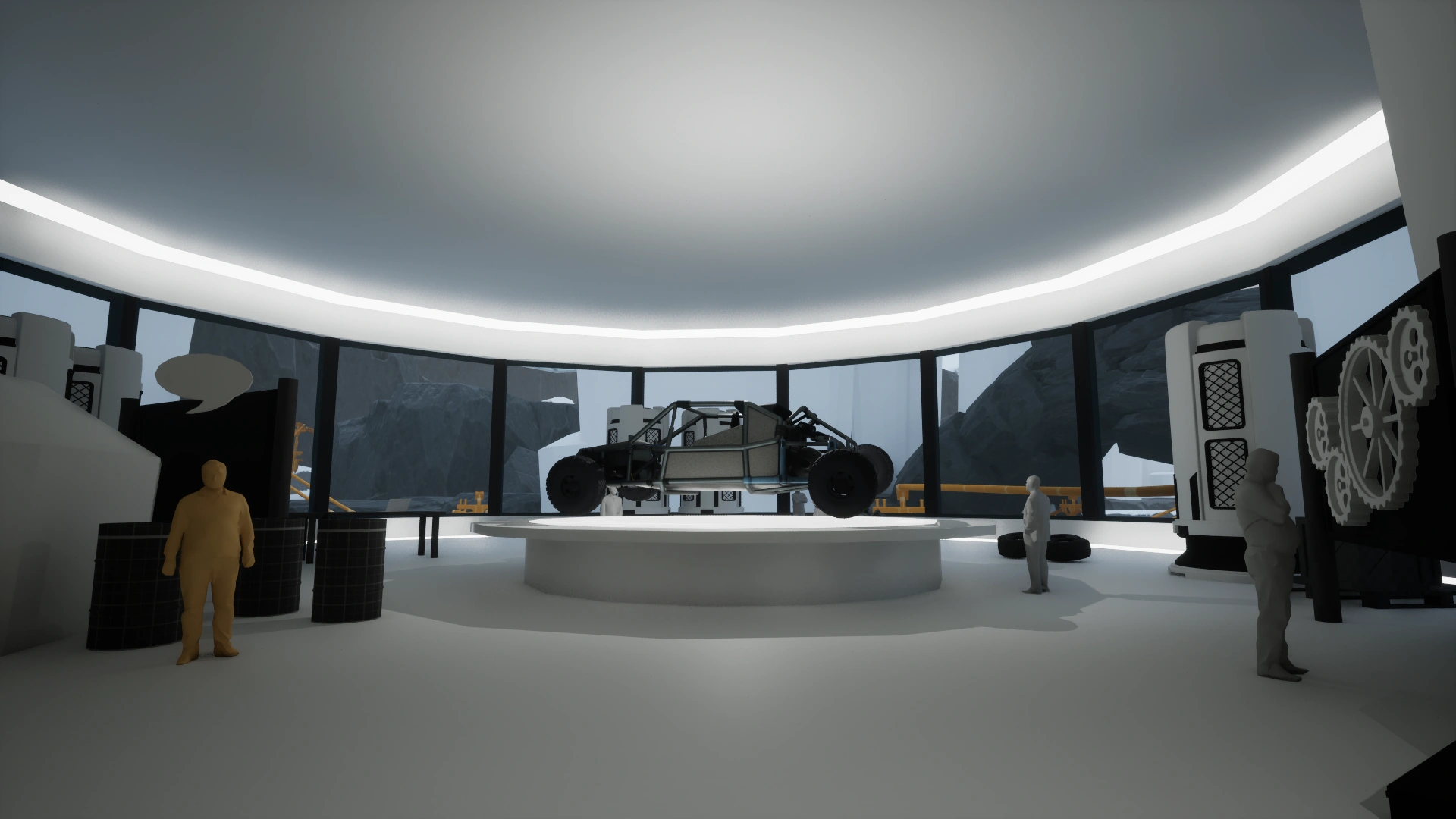
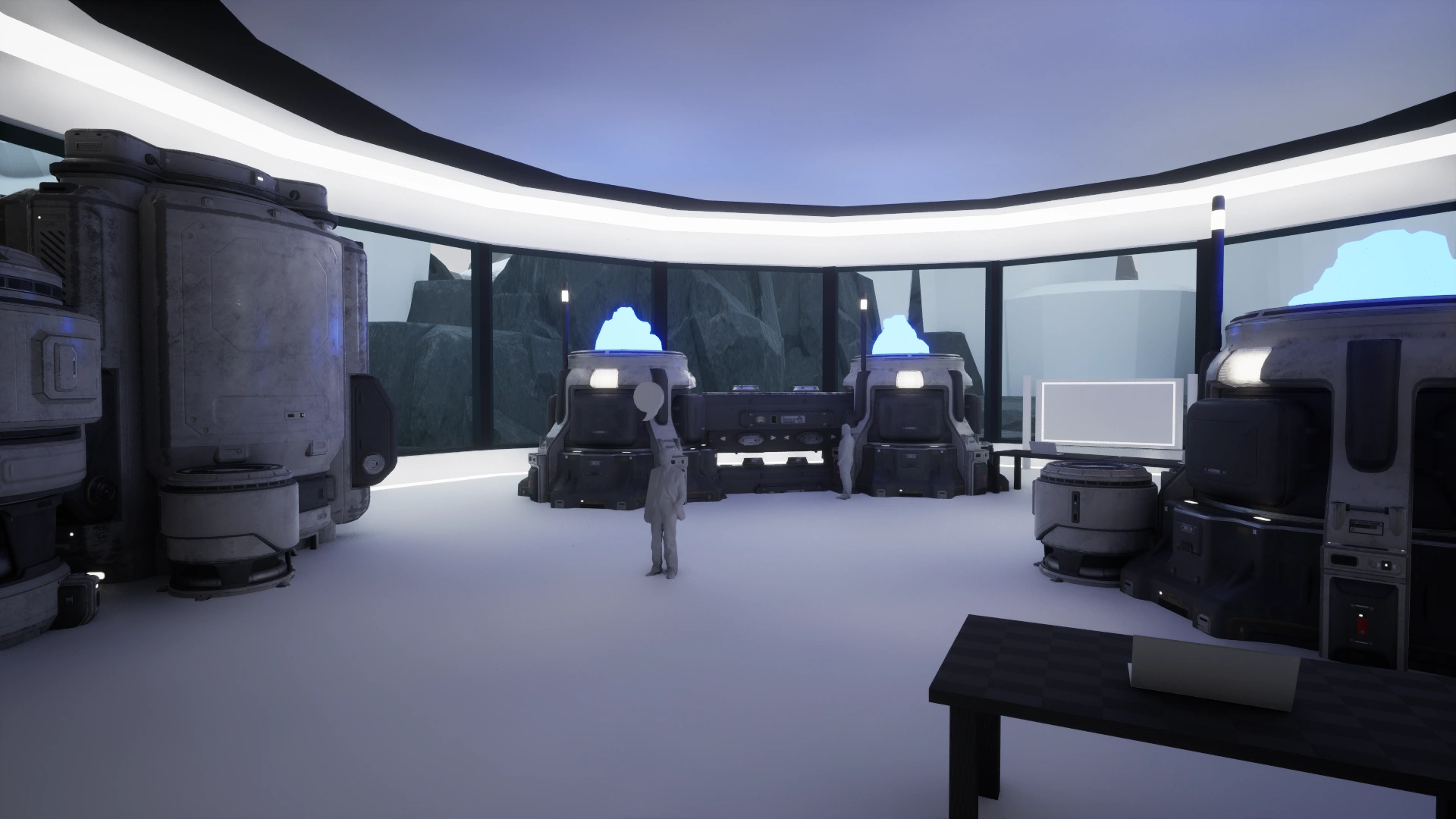
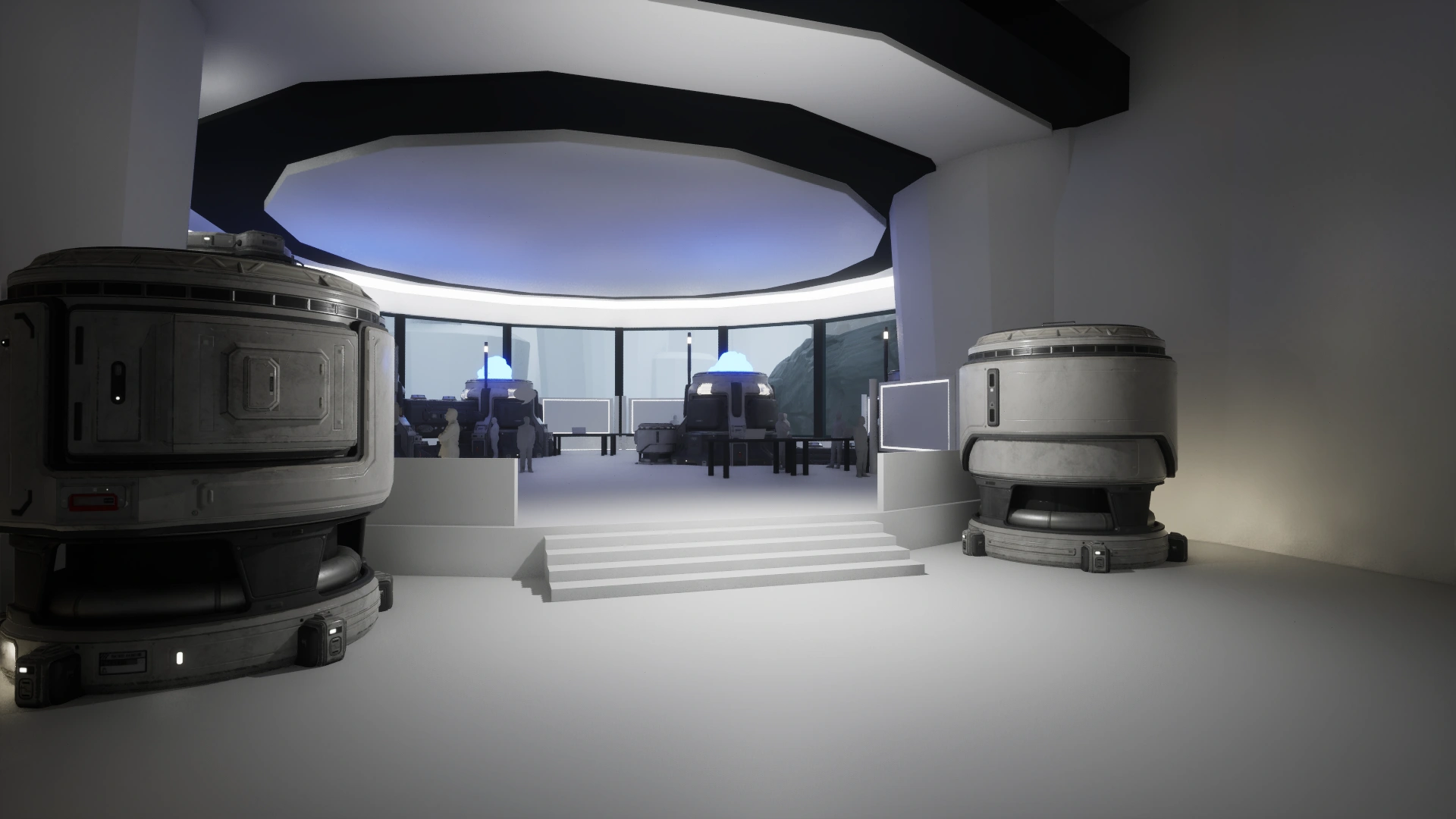
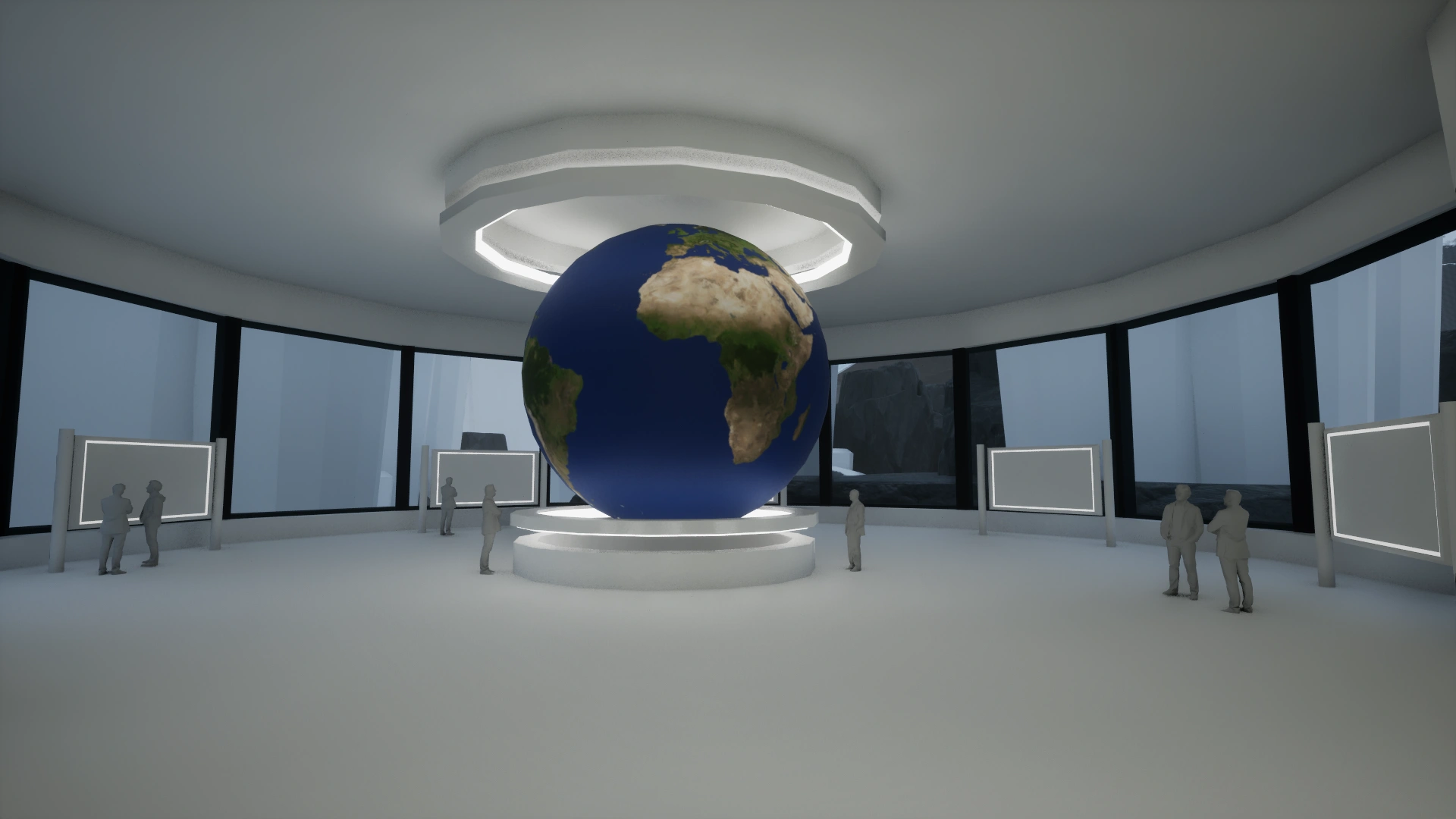
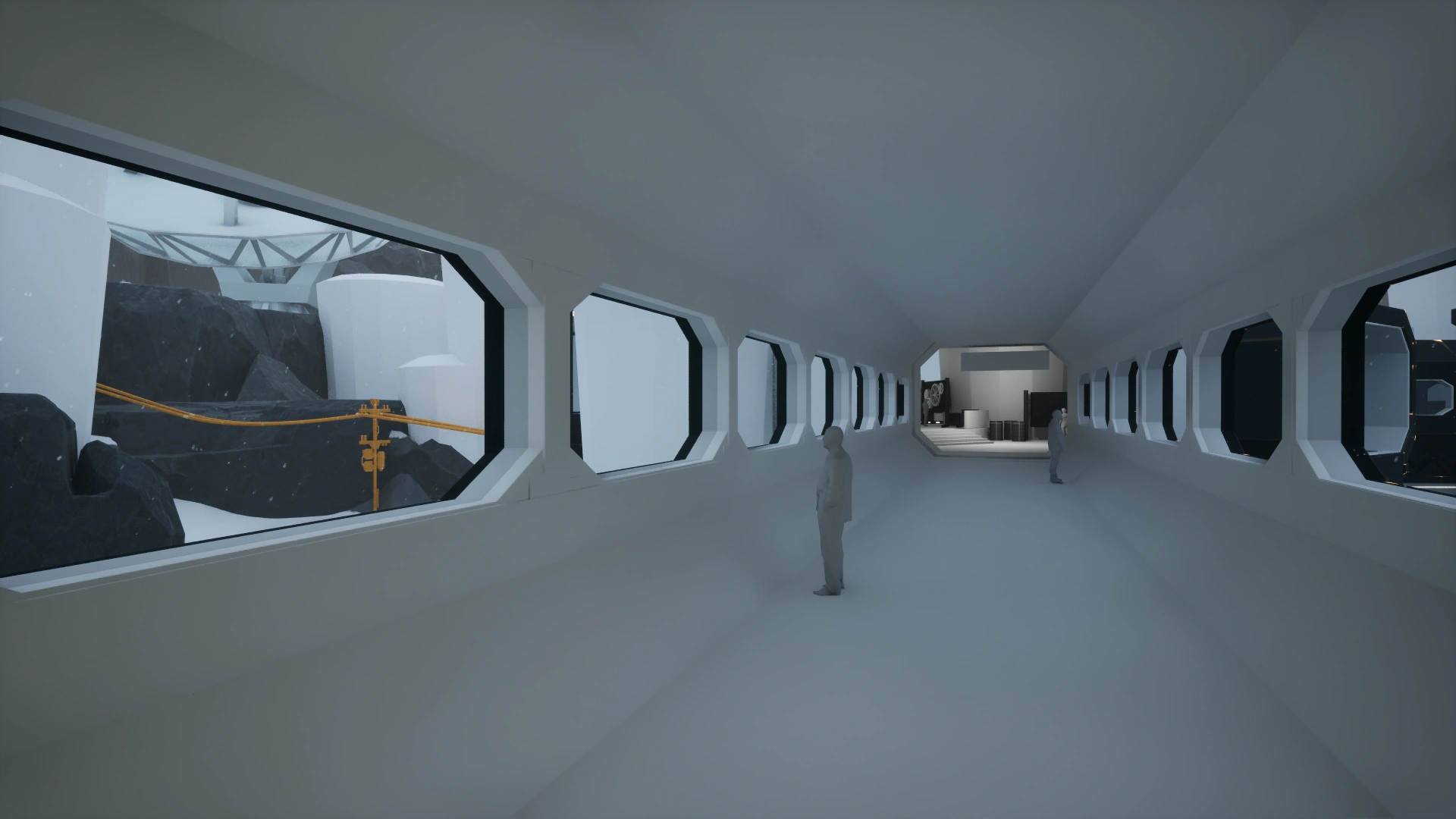
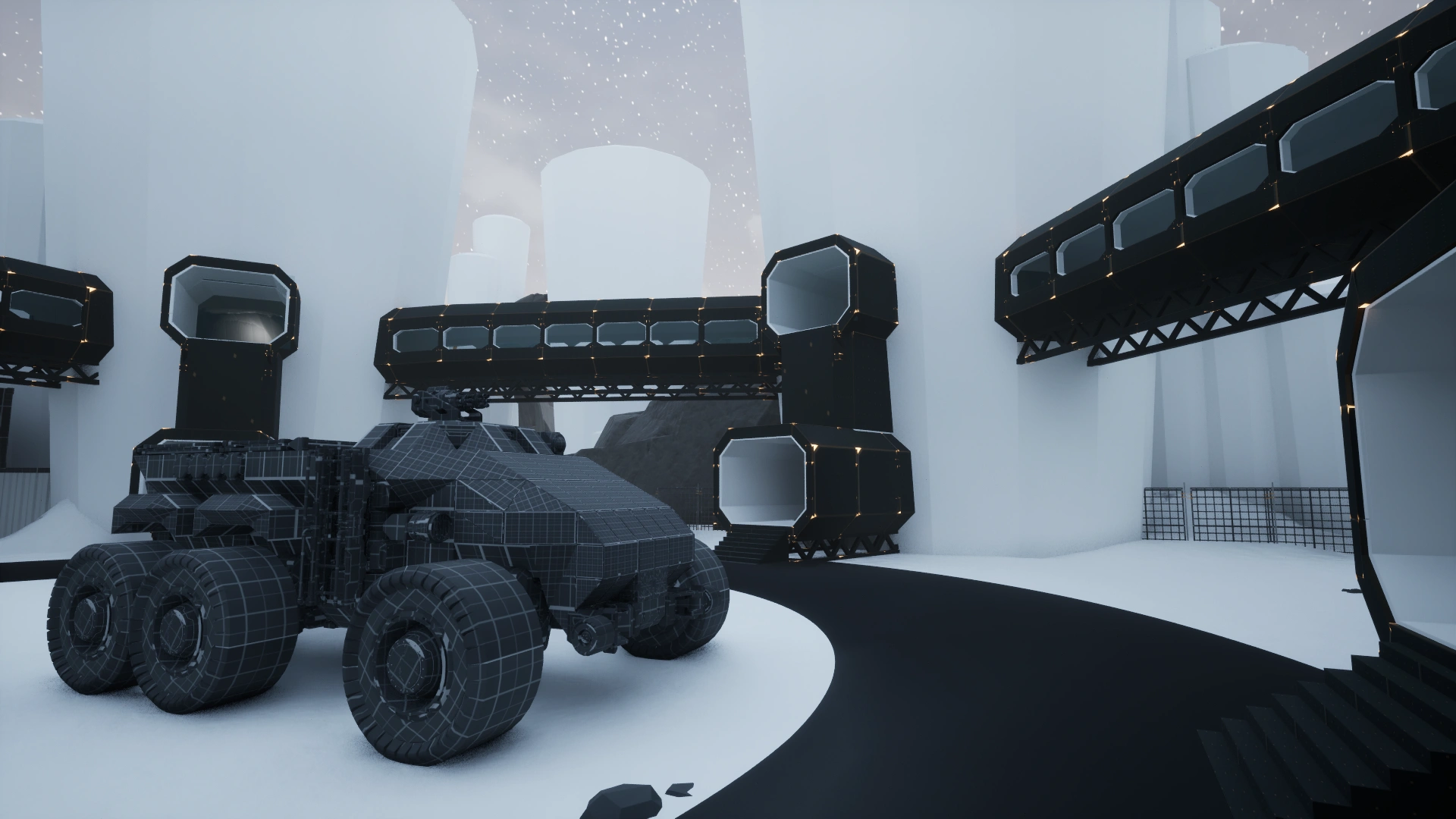
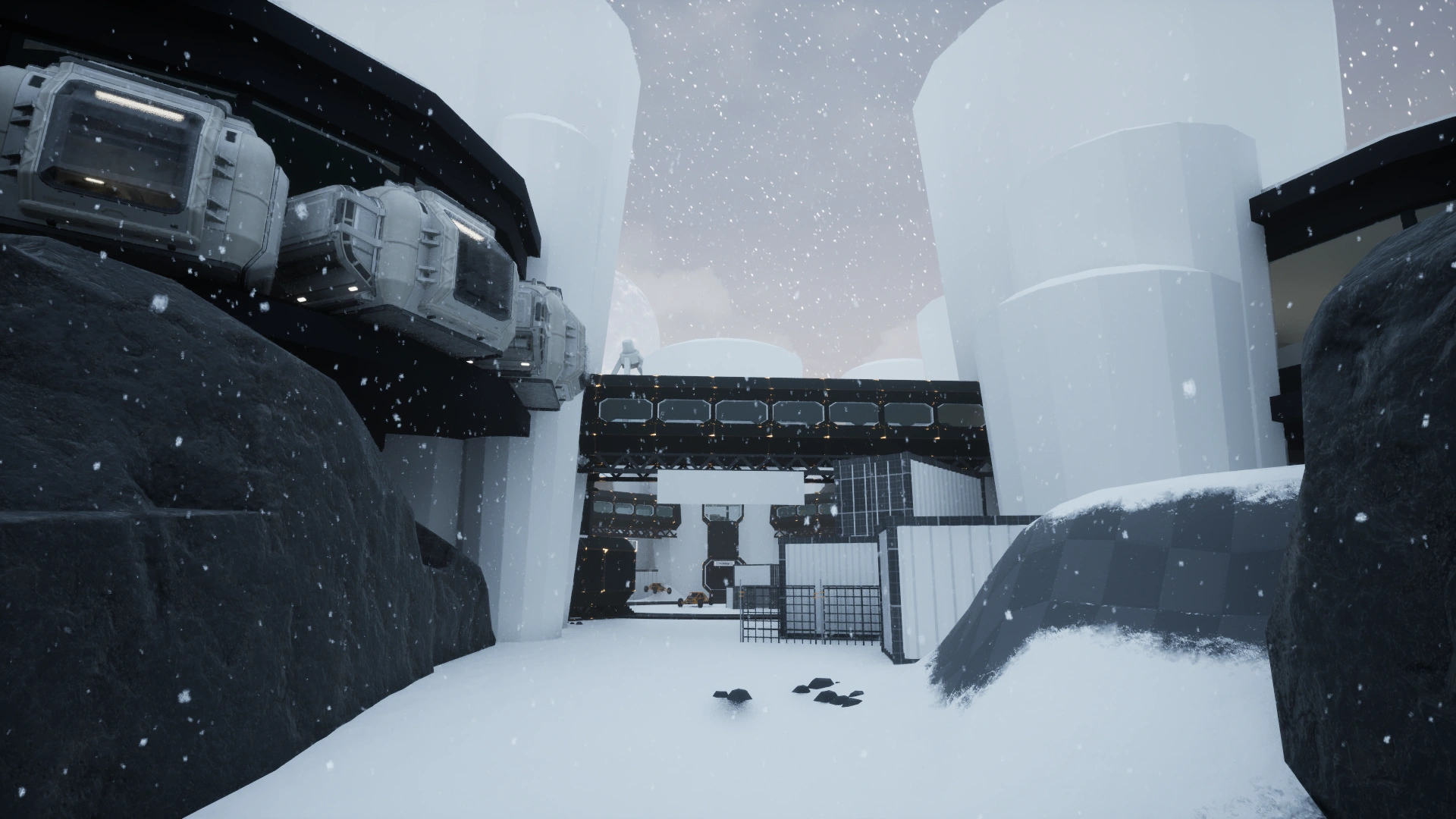
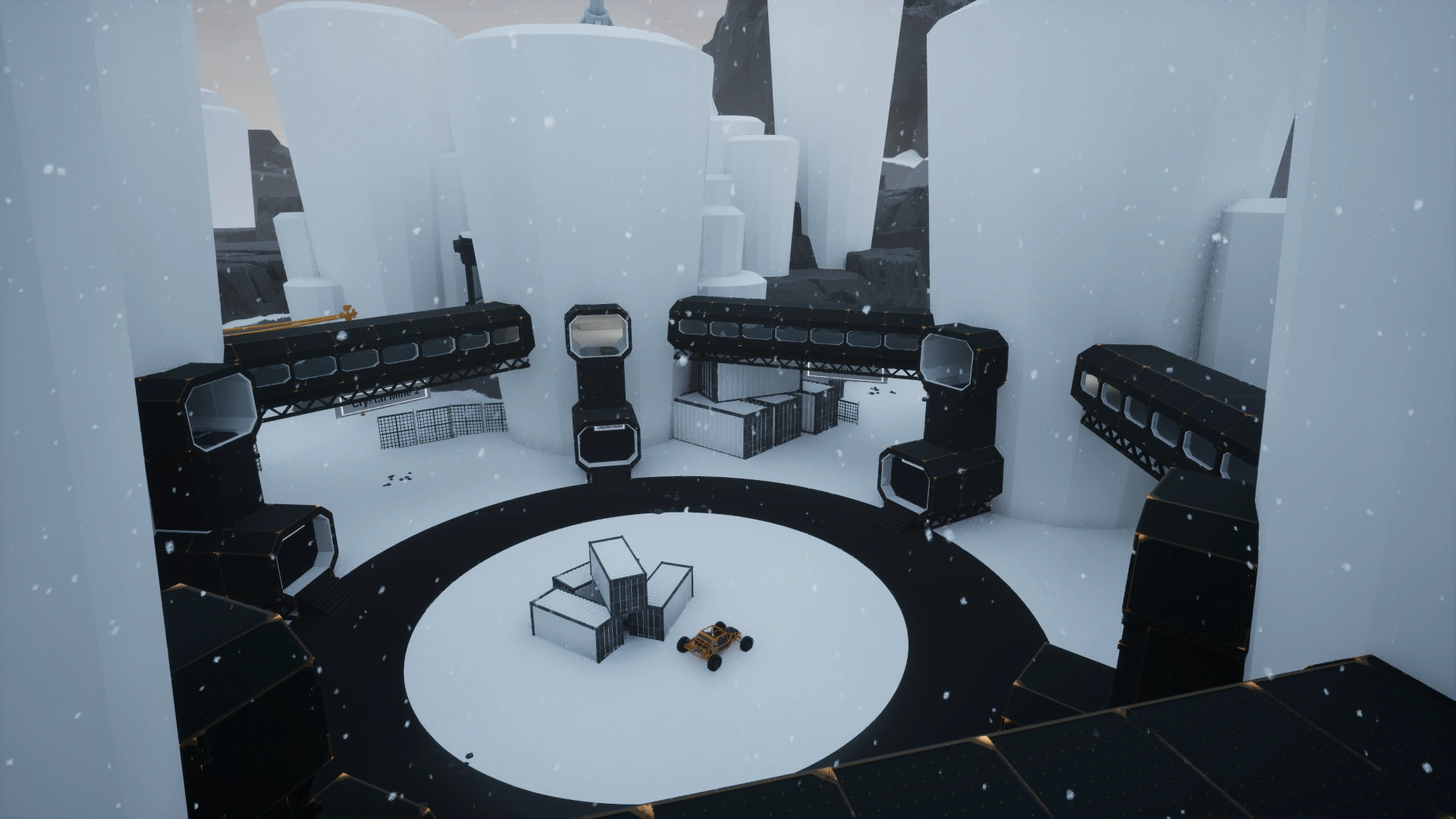
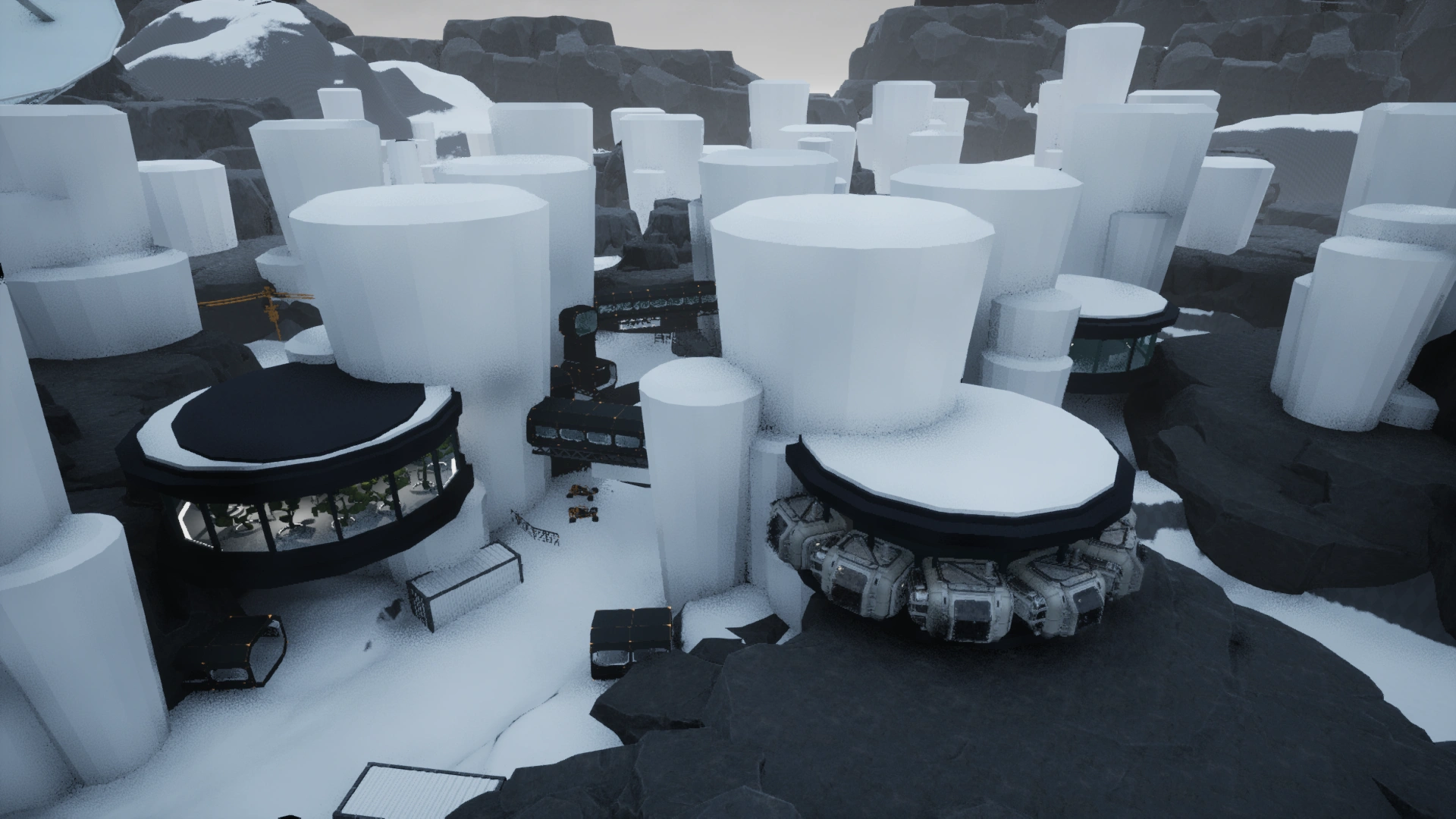
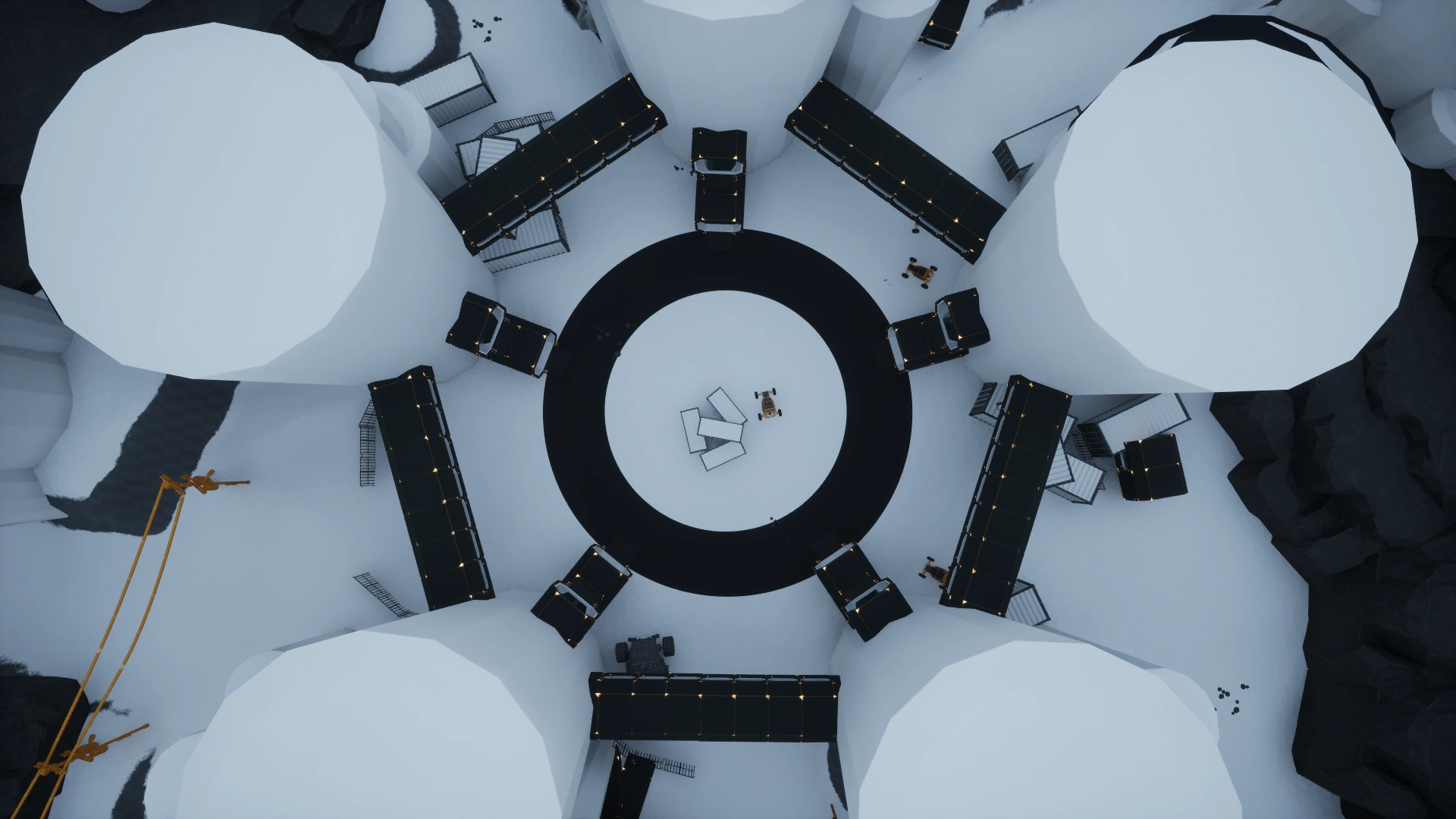
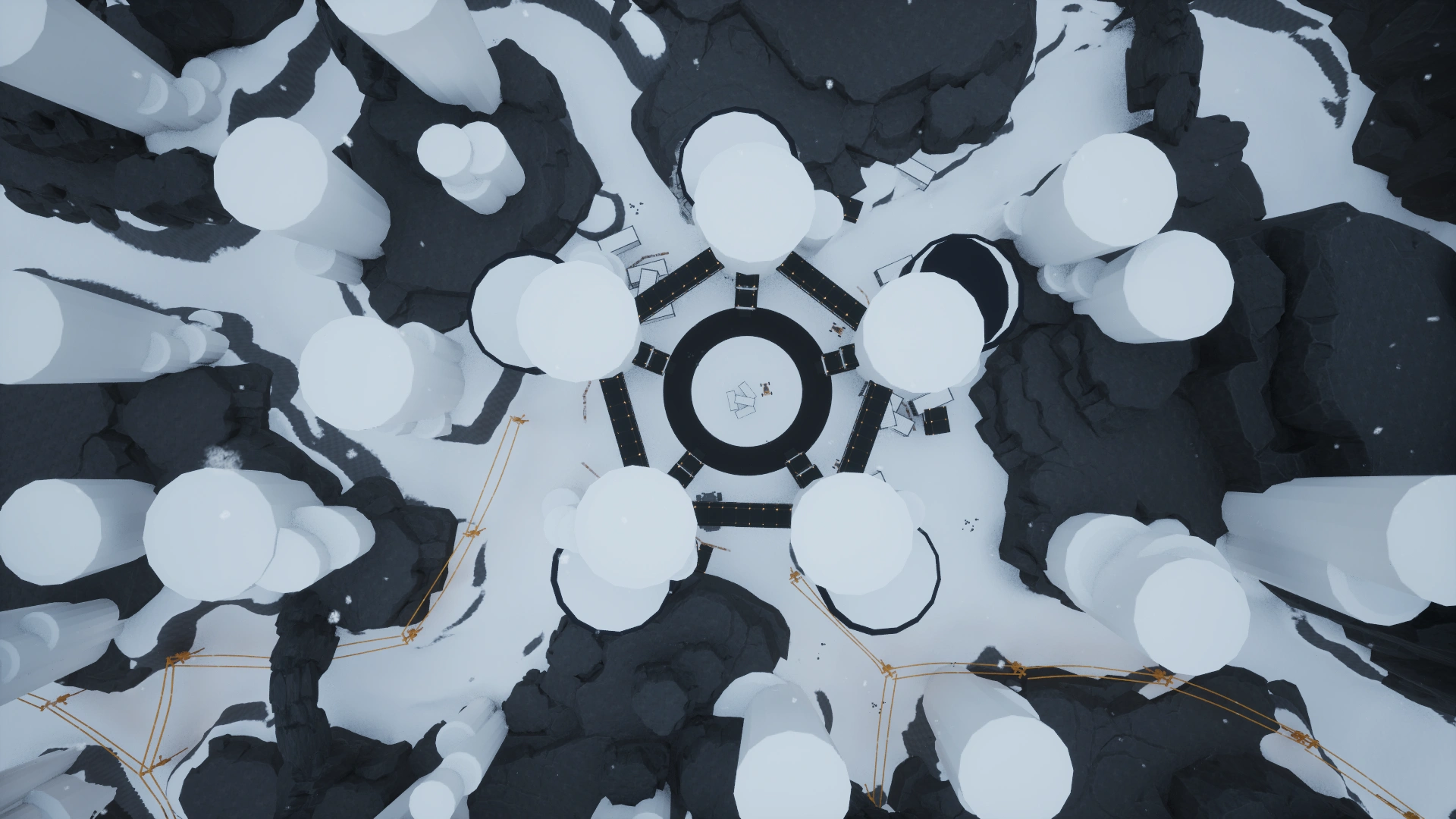
The space base is designed as a modular structure consisting of five interconnected units, arranged in a pentagonal layout. Each module is elevated on large ice pillars, creating a striking visual. The use of whitecolor in interior and a clear architectural layout enhances environmental readability and reinforces a sense of safety for the player.
Driving and walking zones
Introducing the ability to drive a vehicle across the lunar surface required me to model the environment with wider paths and smoother turns to ensure a satisfying driving experience.
Due to the vehicle's high speed, I also had to place points of interest much farther apart than originally planned, in order to maintain proper pacing and give the environment a sense of scale.
Gameplay Landmarks
-
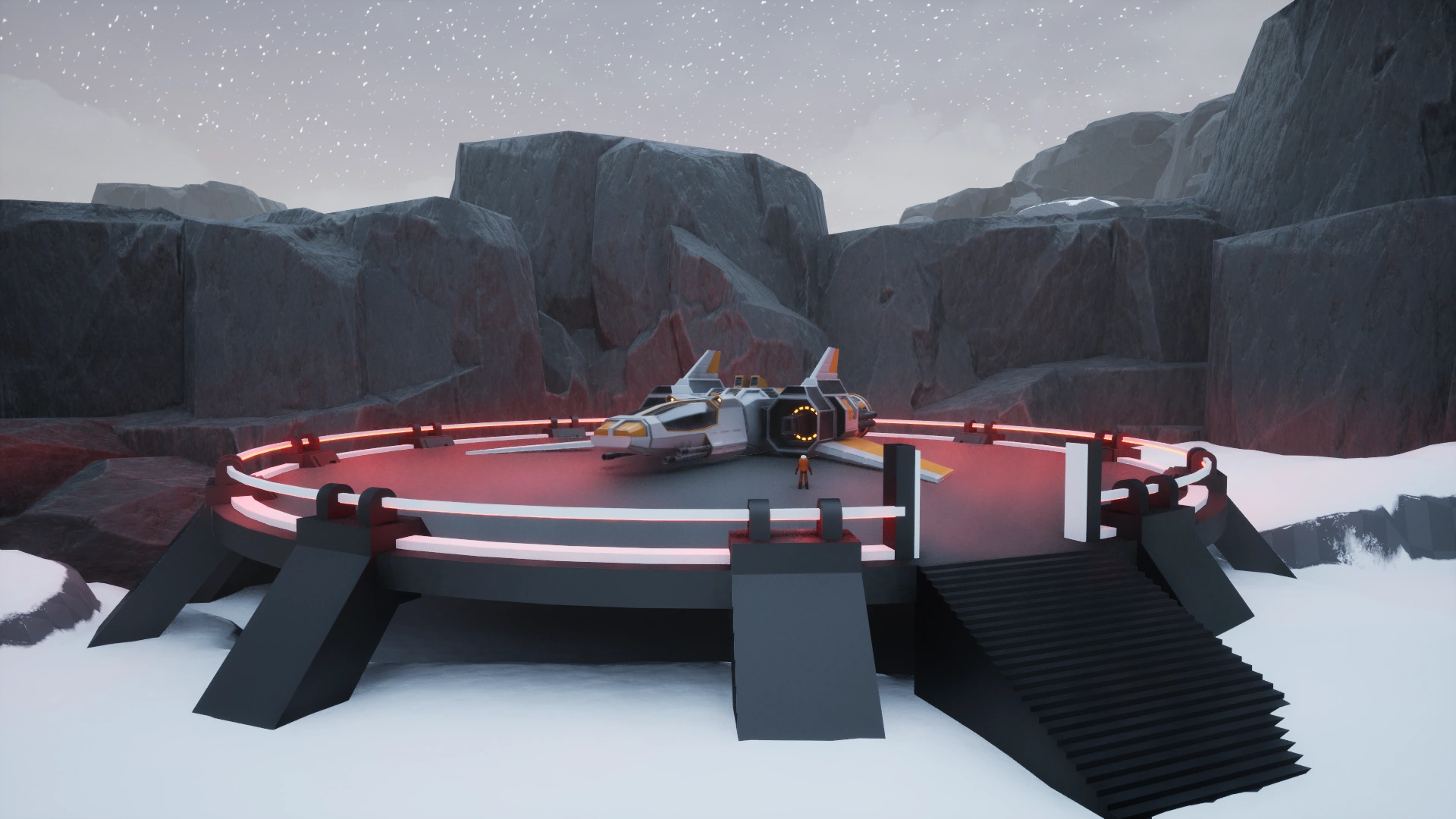
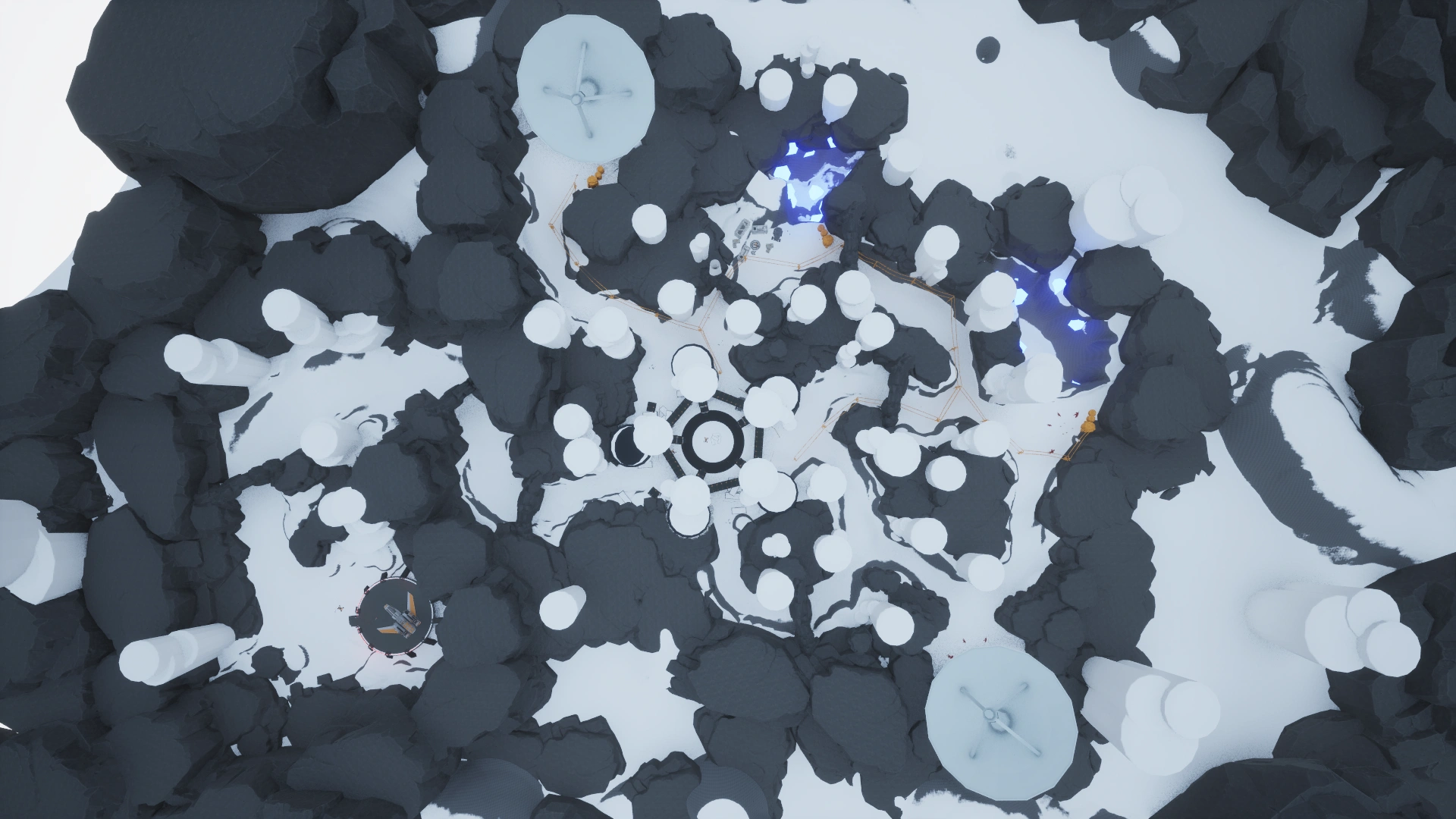
Spaceship Launch Platform: A large landing platform emerging from the terrain serves as the first sign of human activity on the planet, imposing a spatial character on the rest of the level.
-
Space Base: Set on tall ice pillars, the structure is a hub for missions and narrative elements.
-
Mining zones: Secondary structures: They serve as quest locations and support environmental storytelling.
-
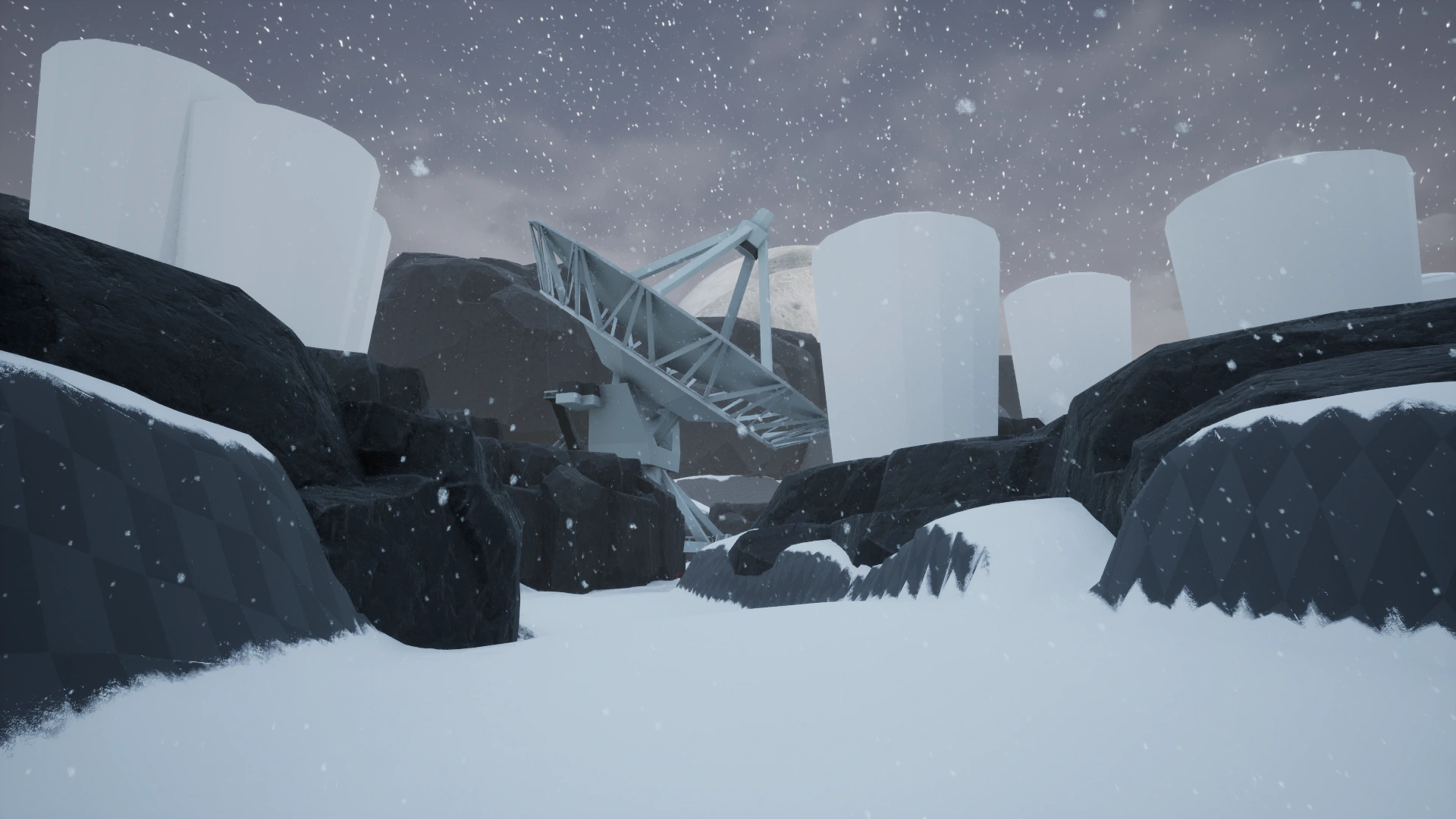
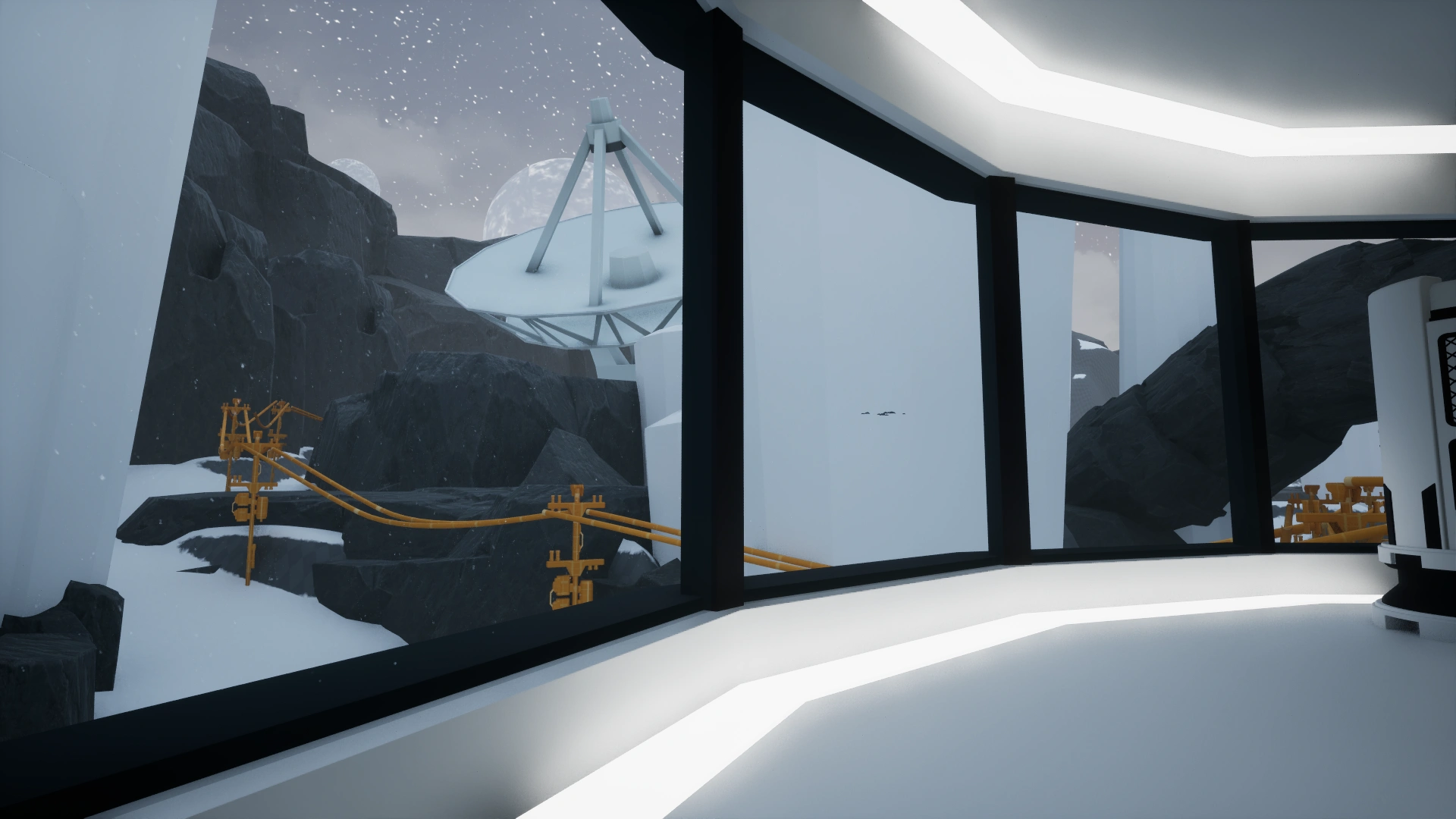
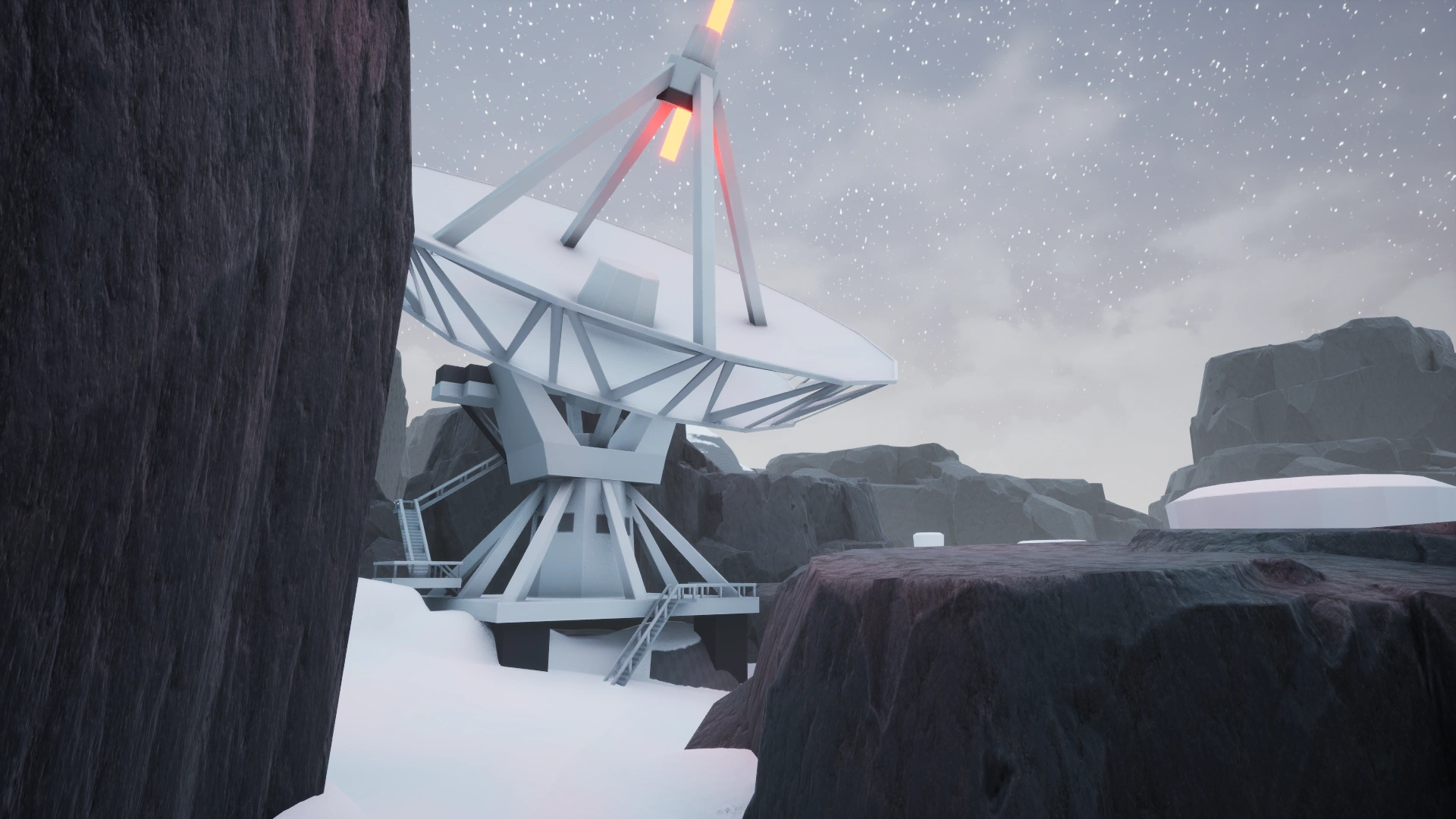
Satelites: Tall landmarks that aid navigation within the level and give the environment a sci-fi tone.
Navigation Strategy
Hub‑and‑Spoke Flow: The central base operates as a hub, linking outward to mission zones nestled between pillars and rock formations. Clear pathways radiate outward, reducing player disorientation.
Landmark‑Based Orientation: The satlites act as primary distant beacons, visible from nearly all vantage points. Their verticality naturally draws the player’s eye and steers exploration.
Visual Direction
Monochrome Contrast: The base exterior features a sleek, dark metallic shell that sharply contrasts with bright, icy terrain—establishing a strong, high‑contrast visual identity.
Material and Detail Hierarchy: Urban, grid‑patterned panels on the base emphasize structure and functionality, while the surrounding ice pillars are clean and white, creating a visual dialectic between man‑made and natural forms.
Level Breakdown
BASE
-
Structured , orderly
-
Bright inside
-
Clear
-
Quiet
-
Illuminated
-
No nooks and crannies
ENVIRONMENT
-
Organic, harsh
-
Cold wind blowing
-
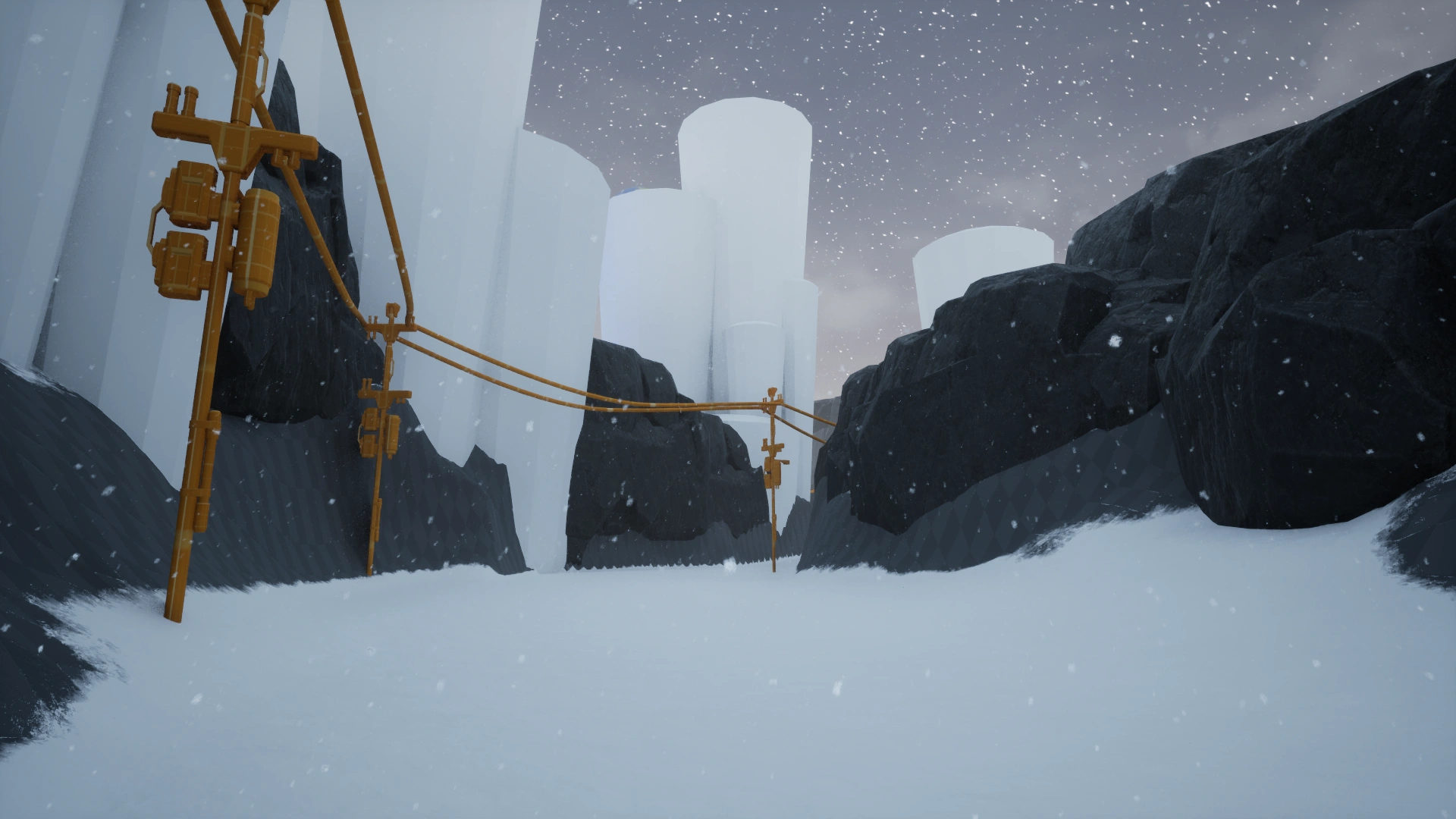
Snow blizzard
-
Unpredictable
-
Overwhelming scale
-
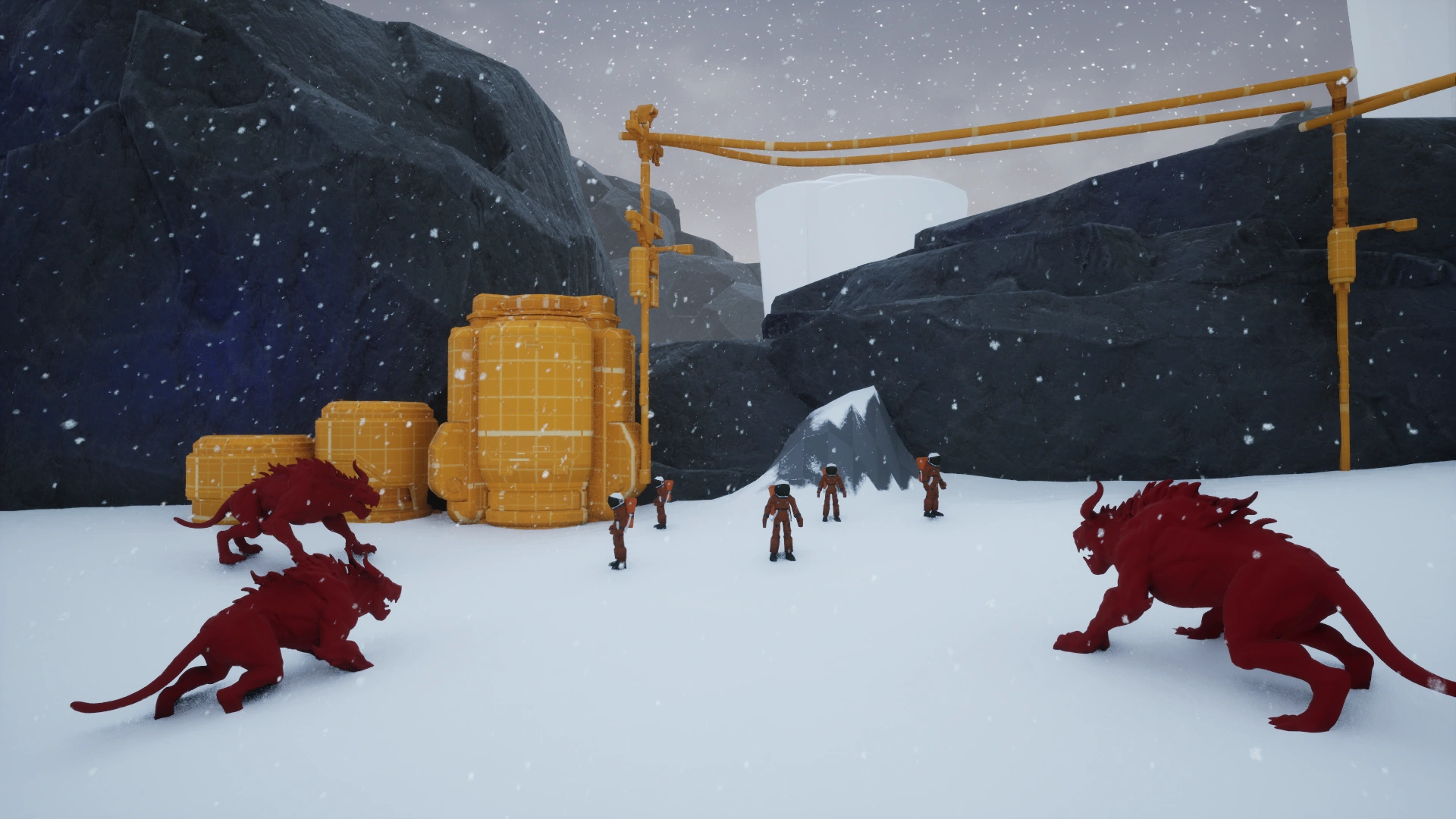
Dangers lurking around the corner
Adding falling snow and blowing wind enhances the level’s distinct atmosphere, emphasizing the base as a safe hub for science, technology, and logistics.
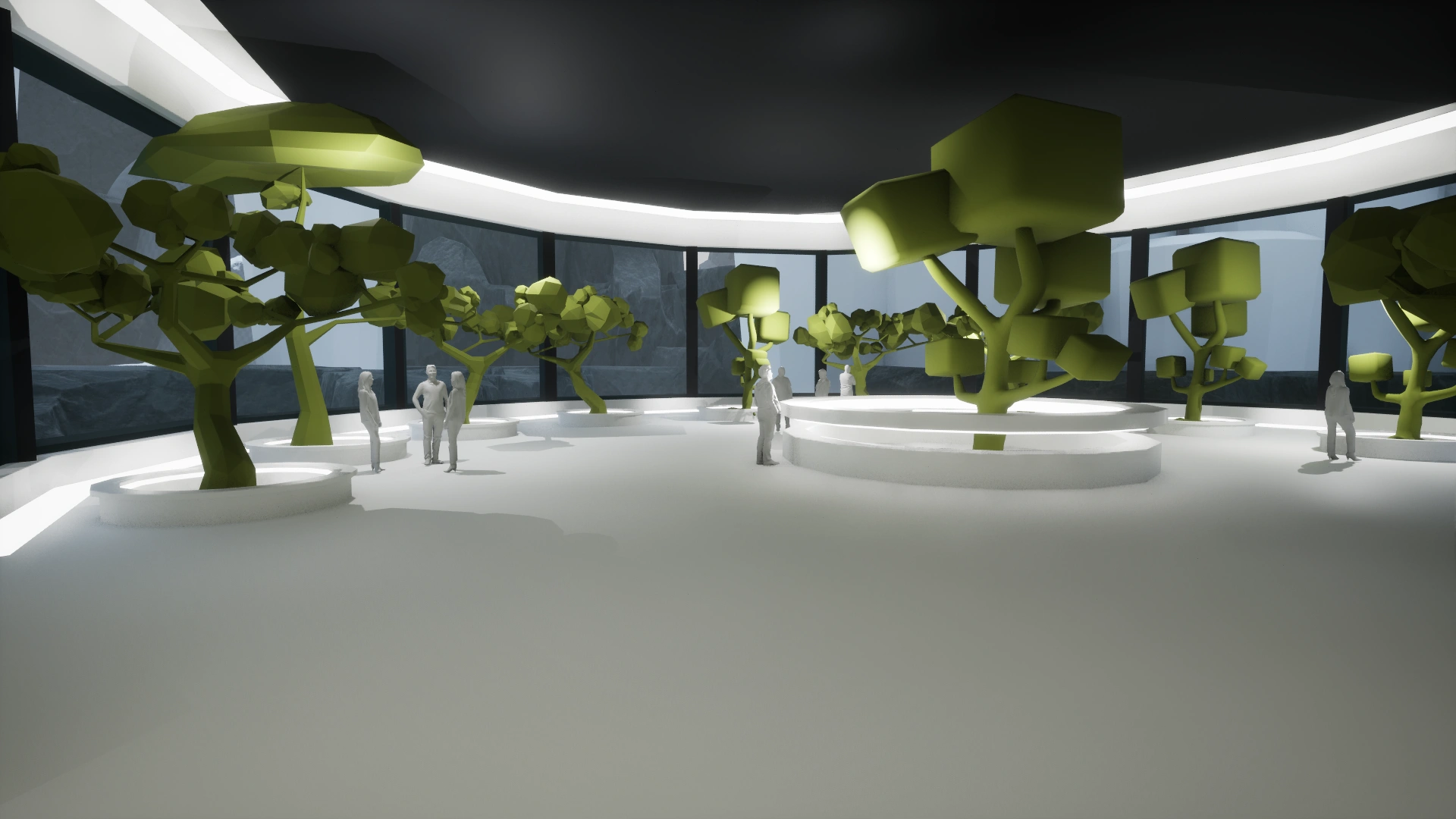
The base is designed in an orderly way — its interior is bright, white, and well-lit, reinforcing the feeling of safety.
The contrast between the harsh, dangerous exterior and the warm, secure interior is highlighted through architecture, weather conditions, and contrasting colors.
The contrasts emphasized through a variety
of visual and design choices.
Base Facility
vs
Environment
Other research stations
Better written quests
Walking and driving zones
The current level is structured around a single, centrally located base, with smaller open-air locations scattered around it. I’d like to expand the layout by adding distant research outposts that would serve as additional hubs for quest activity. These outposts could offer opportunities for rest after challenging missions, as well as deeper interactions with NPCs and further narrative development.
I’d like to improve the visual clarity between areas designed for rover traversal and those intended for on-foot exploration. Currently, the only distinction lies in the level geometry — such as wide canyons and gentle curves for driving.
To enhance readability, I plan to introduce visual cues like tire tracks on paths meant for vehicles, and different ground textures or materials in walkable zones. Additionally, adding designated parking spots could help clearly indicate transition points between driving and walking.
The currently implemented quests are quite simple and follow a basic structure: “go to a location and perform an action.” There’s significant potential for improvement here. The narrative could be enriched with threads involving scientific research, mineral excavations, multi-layered conflicts, and player-driven decision-making to create a more engaging and dynamic experience.
What would I have changed
If I had more time?
Post Mortem
Project Gallery
For further content please fell free to check out my social media